

Carp Hooks
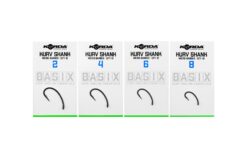
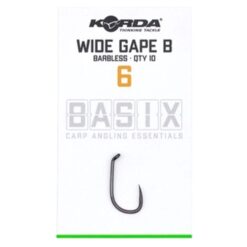
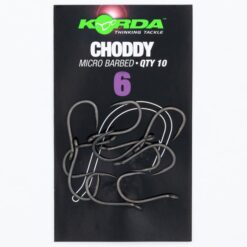
Carp hooks range from wide gape and curved shank patterns to chod, long shank and specialist floater designs. eTackle compares current prices across verified fishing-tackle retailers, helping you find and compare suitable patterns in one place.
Read more Read less
There is no single right hook pattern for every angler or situation. Preference depends on the rig, hookbait, lakebed, fishing style and the fishery rules on barbed or barbless tackle.
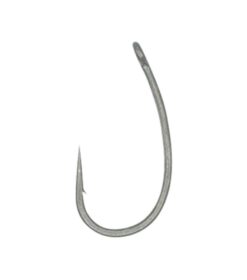
Gape describes the space between the point and shank, while shank length and curve influence how the hook turns and sits beside the bait. Eye angle also affects how the hook leaves the hooklink and works with a knotless-knot or stiff-rig presentation.
Fine-wire hooks keep surface and delicate presentations light, while heavier forged patterns provide more strength for demanding bottom-bait work. Compare the named pattern, size and number of hooks in the packet before deciding which price offers better value.
Explore related carp terminal tackle categories:
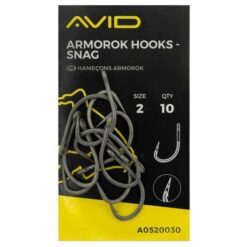
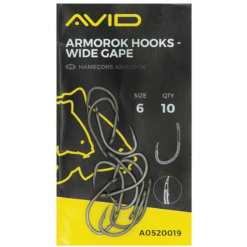
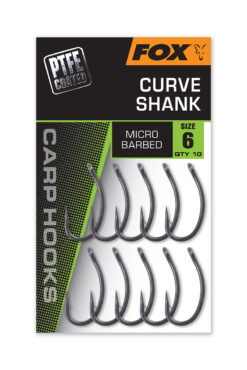
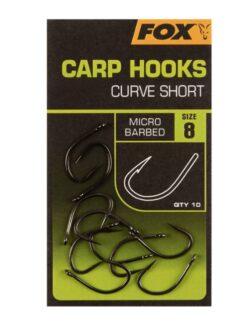
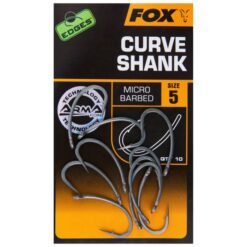
Fox Edges Armapoint Curve Shank Hooks
✓ Reviewed 8.3 / 10
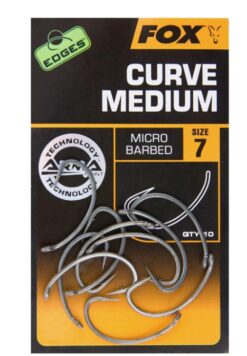
Fox Edges Armapoint Curve Shank Medium Hooks
Price Compared
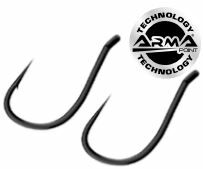
Fox Edges Armapoint Stiff Rig Beaked Hooks
Price Compared
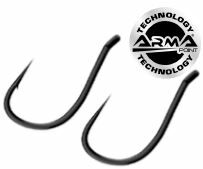
Fox Edges Armapoint Stiff Rig Straight Hooks
Price Compared
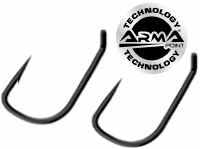
Fox Edges Armapoint Wide Gape Straight Hooks
Price Compared
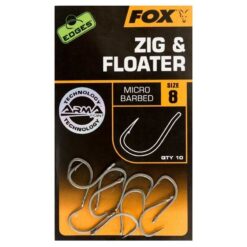
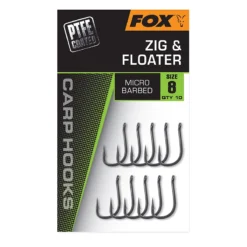
Fox Edges Armapoint Zig & Floater Hooks
✓ Reviewed 8.4 / 10
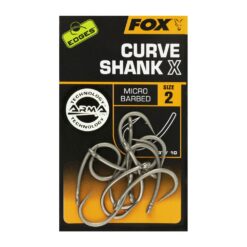
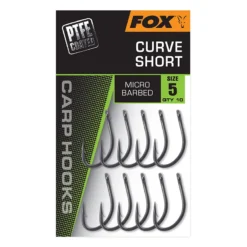
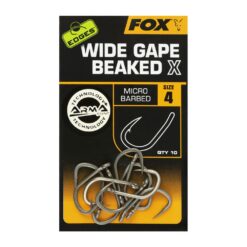
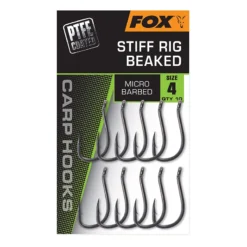
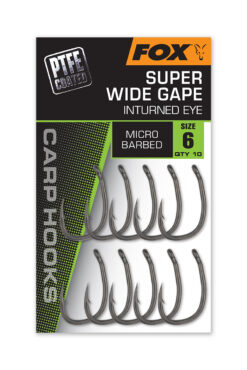
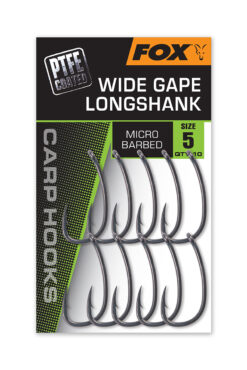
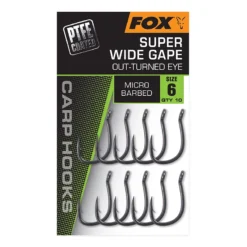
Fox Super Wide Gape Out-Turned Eye Hooks
Price Compared
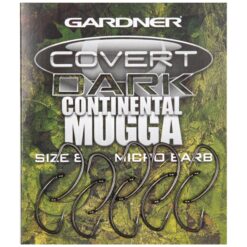
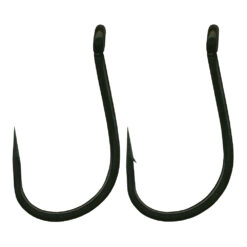
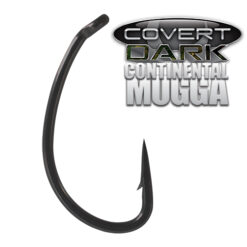
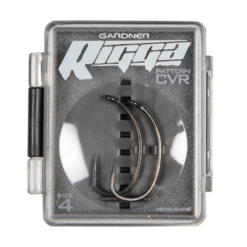
Gardner Covert Dark Continental Mugga Hooks
Price Compared
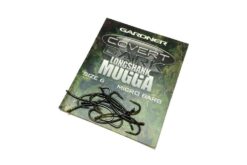
Gardner Covert Dark Longshank Mugga Hooks
Price Compared
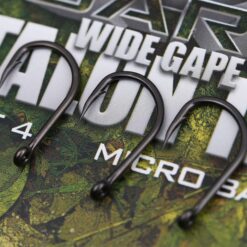
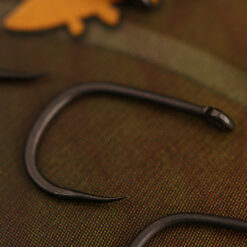
Gardner Covert Dark Wide Gape Talon Tip Hooks
✓ Reviewed 8.4 / 10
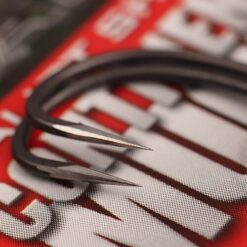
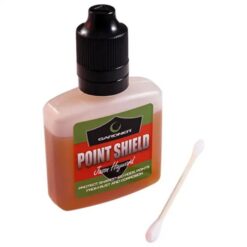
Gardner Hand Sharpened Covert Dark Continental Mugga Hooks
Price Compared
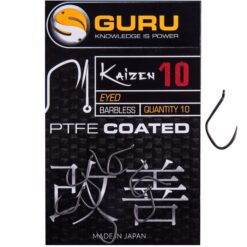
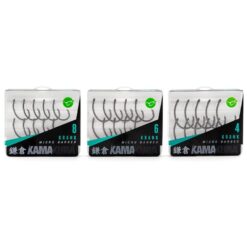
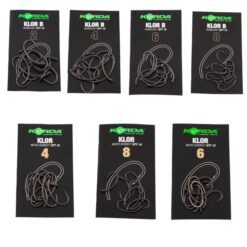
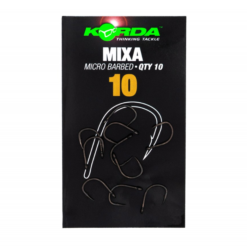
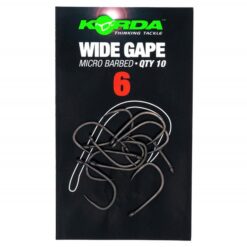
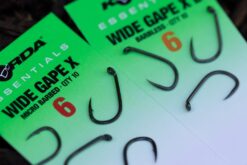
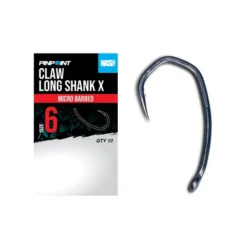
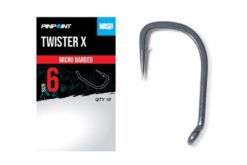
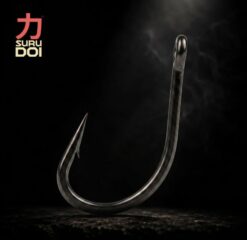
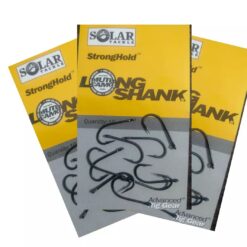
Solar Stronghold Longshank Mute Camo Hooks
Price Compared
No products match those filters.
Choosing a Carp Hook Pattern
Wide-gape patterns leave plenty of space between shank and point and work with many bottom-bait, wafter and snowman rigs. Curved-shank hooks create a more pronounced turning angle, while chod-style patterns use an eye and shape intended for stiff hook sections.
Long-shank hooks provide extra separation between hookbait and point, whereas compact patterns can keep the rig less conspicuous. Surface fishing usually favours a lighter hook that allows the bait to behave naturally.
Size, Wire Gauge and Barb Type
Hook sizing runs backwards, so a size 4 is larger than a size 8, but size alone does not determine strength. Wire gauge, forging and the shape of the bend all contribute to how much pressure a hook can withstand.
Barbless hooks are easier to remove and are compulsory on some fisheries, while micro-barbed and barbed versions can offer greater resistance to the hook working loose. Always follow the rules of the water being fished.
Getting Value From a Packet of Carp Hooks
Compare like with like by checking the exact hook pattern, barb type, size and packet quantity. A cheaper packet may contain fewer hooks, and a premium coating or hand-sharpened point can make two similar-looking patterns materially different.
For the clearest value comparison, use the packet price alongside the quantity rather than judging the headline price on its own. Delivery can also matter when hooks are bought without other tackle.
To match a hook to your rig, from chods and spinner rigs to zigs and floaters, read our best carp hooks guide.
Frequently Asked Questions
Which carp hook pattern suits a bottom-bait rig?
Wide-gape and curved-shank patterns are both widely used for bottom baits, but the best choice depends on the hooklink, bait shape and the way the rig is intended to turn. Check that the point remains exposed and the hook can move freely beside the bait.
What is the difference between barbed and barbless carp hooks?
A barbed hook has a small backward-facing projection behind the point, while a barbless hook does not. Fishery rules should be checked first because some waters allow only barbless patterns.
Why does wire gauge matter on a carp hook?
Fine wire is lighter and can suit delicate or surface presentations, while heavier wire provides more strength for demanding situations. Gauge should be considered alongside hook size, forging and the tackle being used.
How should carp hook packet prices be compared?
Check the named pattern, barb type, size and number of hooks in each packet. Delivery cost can outweigh a small difference in packet price when hooks are ordered on their own.