

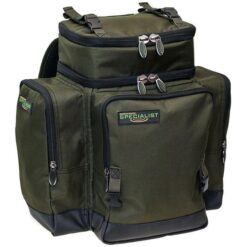
Rucksacks
A rucksack has to carry everything a session needs and still sit comfortably on your back for the walk in. eTackle checks reputable online tackle shops for each one here and opens it at the lowest in-stock price.
Read more Read less
Every rucksack shows how many of our verified shops have it, so the price you see is the cheapest that is actually in stock. Reviewed bags carry an eTackle score for sorting by how they performed.
Capacity in litres, the number of pockets and whether rigid tackle boxes are included are what separate one bag from the next. Each listing puts those details beside the price.
Explore related carrying kit:
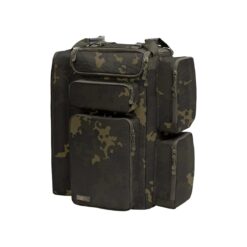
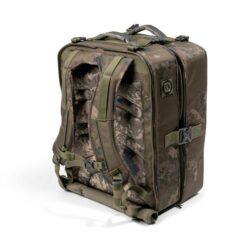
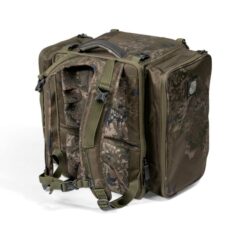
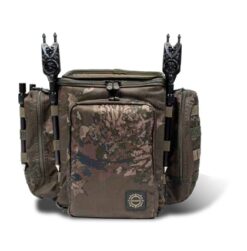
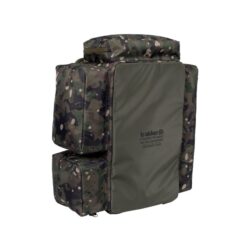
No products match those filters.
Choosing a Size
Capacity is quoted in litres and tells you how much the main compartment holds. Day packs of around twenty to thirty litres suit short sessions and roving, while forty to sixty litres carries the food, clothing and tackle an overnighter needs.
A bigger bag is only useful if it still fits your barrow or the back of the car. Think about the walk to the swim as much as the volume.
Ruckbags and Ruckalls
A ruckbag is a wider, squarer version of a rucksack, cut to take rigid tackle boxes and bulkier gear without wasted space. A ruckall crosses a rucksack with a holdall, so it can be carried on the back or by a handle.
Both trade a little comfort on a long walk for a shape that packs more neatly. Anglers who move swims often tend to prefer a taller, narrower rucksack.
Straps, Fabric and Care
Padded shoulder straps and a firm back panel make the difference once a bag is loaded, and a waist strap keeps the weight off your shoulders on a longer carry. Heavy base fabric and taped or welded seams keep wet ground and rain out of the bottom of the bag.
Empty the bag out after a session and let it dry open before it goes in the garage, as damp bait and wet nets are what ruin a lining. Our best coarse and match fishing trolleys guide covers the other way to move heavy gear to the swim.
Frequently Asked Questions
What size rucksack do I need for fishing?
Twenty to thirty litres is enough for a short session or a roving day. Forty litres and above suits an overnighter, where food, clothing and a cooker have to go in as well.
What is the difference between a rucksack and a ruckbag?
A rucksack is taller and narrower, so it carries more comfortably on the back. A ruckbag is wider and squarer, which suits rigid tackle boxes and bulky gear.
Are fishing rucksacks waterproof?
Most use a water resistant coated fabric with taped seams rather than being fully waterproof. A roll top or a separate rain cover is what keeps the contents dry in heavy rain.
Can a rucksack hold rigid tackle boxes?
Many are sold with boxes that slot into the main compartment or a front panel. Check the quoted box sizes if you already own tackle boxes you want to carry.
How should a fishing rucksack be cleaned?
Empty it fully, brush off dried mud and wipe the lining with warm water. Let it dry open and away from direct heat so the coating and the stitching are not damaged.