

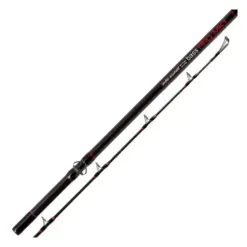
Beachcaster / Surf Rods
Find a beachcaster or surf rod and see the cheapest in-stock price on each, pulled live from reputable online tackle shops so you pay the lowest going rate. Sort by casting weight, length and power in the filters to land on the rod that suits your mark.
Read more Read less
Every rod on this page is price-checked against our verified shops, so the figure you see is the best one available right now.
Narrow the grid by brand, price band and length, then open any rod to compare the shops side by side and jump to the cheapest one.
You can also order by review score to put the rods anglers rate highest at the top of the list.


Anyfish Anywhere Four&Bait Mk2 Combo
✓ Reviewed 8.1 / 10
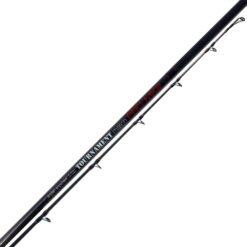
Anyfish Anywhere Tournament Match Pro MK2 Rod 13ft 11in
Price Compared
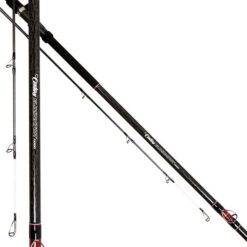
Century Eliminator T1000 Rod 14ft 10in 125-200g
Price Compared
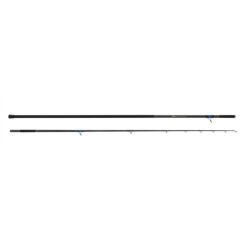
Century Eliminator T900-SGT Rod 14ft 4in 125-200g
Price Compared

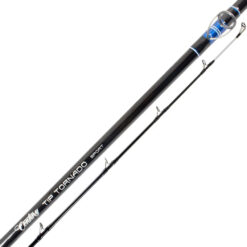
Century Tip Tornado Graphex Sport Rod 13ft 11in 125-225g
Price Compared

Century Tip Tornado Graphex Supermatch Rod
Price Compared
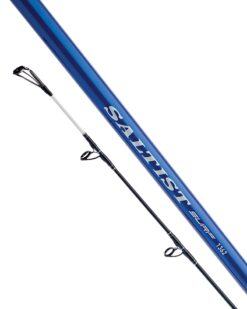
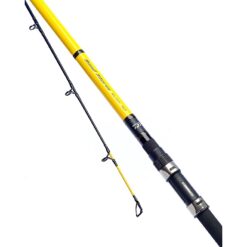
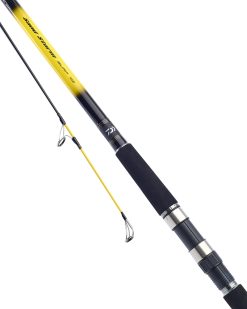
Daiwa Sandstorm Multiplier Surf Rod
✓ Reviewed 8.5 / 10
Daiwa Seahunter Z Beachcaster Rod
✓ Reviewed 8.4 / 10



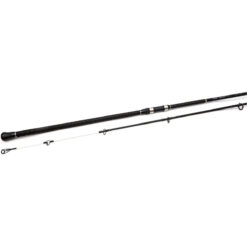
Leeda Surf Zone 10ft 3-5oz Fishing Rod
Price Compared

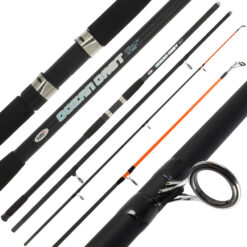
NGT Oceancast 14ft 3pc 4-7oz Beachcaster
Price Compared

Penn Prevail III LE Beach Rod 393 4-6oz
Price Compared

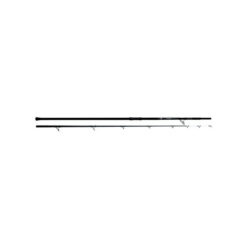
Penn Tidal Beach Caster Rod 14ft 420 4-8oz Slide
Price Compared
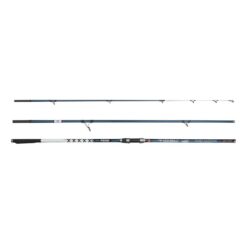
Penn Tidal X 453 K Hybrid Sensitip Rod 15ft
Price Compared

Penn Tidal XT 423 Lowrider Solid Carbon Tip Rod
Price Compared
Penn Tidal XT 453 K Hybrid Sensitip Rod
Price Compared
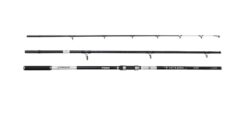


Shakespeare Firebird Beachcaster Combo
✓ Reviewed 7.8 / 10


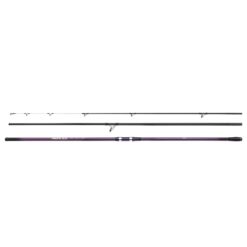
Shimano Aerlex Surf Tubular 4.25m 200g 3pc Low Rider DPS
Price Compared

Shimano Ultegra XR Surf T Rod 4.50m 3pc
Price Compared


No products match those filters.
How to Choose a Beachcaster or Surf Rod
Beachcasters and surf rods are built to throw heavy leads and baited rigs a long way from an open shore, then hold a tight line against the tide. The casting weight stamped on the blank is the figure that decides most of it, because it tells you the lead range the rod is designed to launch cleanly.
Common ratings run from around 4 to 6 ounces for general beach work, with continental and tournament style blanks built for fixed grip casting at the lighter end. A rod matched to the lead you actually fish will load properly and cast further than one that is over or under gunned.
Length is the next thing that matters. Most beachcasters fall between 12 and 14 feet, and the extra length helps clear the breaking surf, lift line over the waves and add distance, though shorter rods are easier to handle on a crowded or steep mark.
Power and action follow from there. A through action bends into the butt for smooth long range casting, while a faster, stiffer blank gives more control over big baits and strong tides.
Two and three piece rods travel and store more easily, so it is worth considering how you carry your gear.
The rod also needs to suit the rest of the setup, with a reel seat and rings that take a sizeable fixed spool or multiplier and the shock leader a beach rig requires. The guide linked below explains the options in more detail.
Beachcaster and Surf Rod Prices and Reviews
There are 42 beachcaster and surf rods listed here, spanning entry level beach blanks through to specialist tournament rods, so there is something for a first sea setup or a serious distance upgrade.
Of those, 12 carry a full eTackle review, where we judge each rod on casting distance, blank stiffness, build quality and how it copes with heavy leads in real surf conditions. To dig into the types and the casting weights in more depth, read our best beachcasting rods guide.
Frequently Asked Questions
What casting weight do I need for a beachcaster?
Most general beach fishing is done with rods rated around 4 to 6 ounces, which covers the lead sizes needed to reach distance and hold bottom in a tide. Matching the rod to the lead you fish most often gives the best loading and casting performance.
How long should a surf rod be?
The majority of beachcasters are 12 to 14 feet long, with the extra length helping to clear breaking surf and add casting distance. Shorter rods can be easier to handle on steep or crowded marks where space is tight.
What is the difference between a beachcaster and a surf rod?
The terms are used for much the same thing, a long rod built to cast heavy leads from an open shore. Surf rod is the more common term for the continental style blanks aimed at long range and fixed grip casting.
Can I use a fixed spool or multiplier reel on a beachcaster?
Both work, and most beachcasters have a reel seat and rings sized to take either. Fixed spool reels are simpler to cast and a good starting point, while multipliers can give greater distance once you have the technique.
Do I need a shock leader with a beach rod?
Yes, casting heavy leads puts a sudden strain on the line, so a heavier shock leader is fitted between the mainline and the rig to absorb it. This protects against crack offs and is standard practice for safe beach casting.
What action is best for a beachcaster?
A through action that bends into the butt suits smooth long range casting and is forgiving for most anglers. A faster, stiffer action gives more control over big baits and strong tides, so the choice depends on how and where you fish.