
Bite Alarms Explained: Features, Types & What To Look For
Last Updated on 1 April 2026 by James Bevan
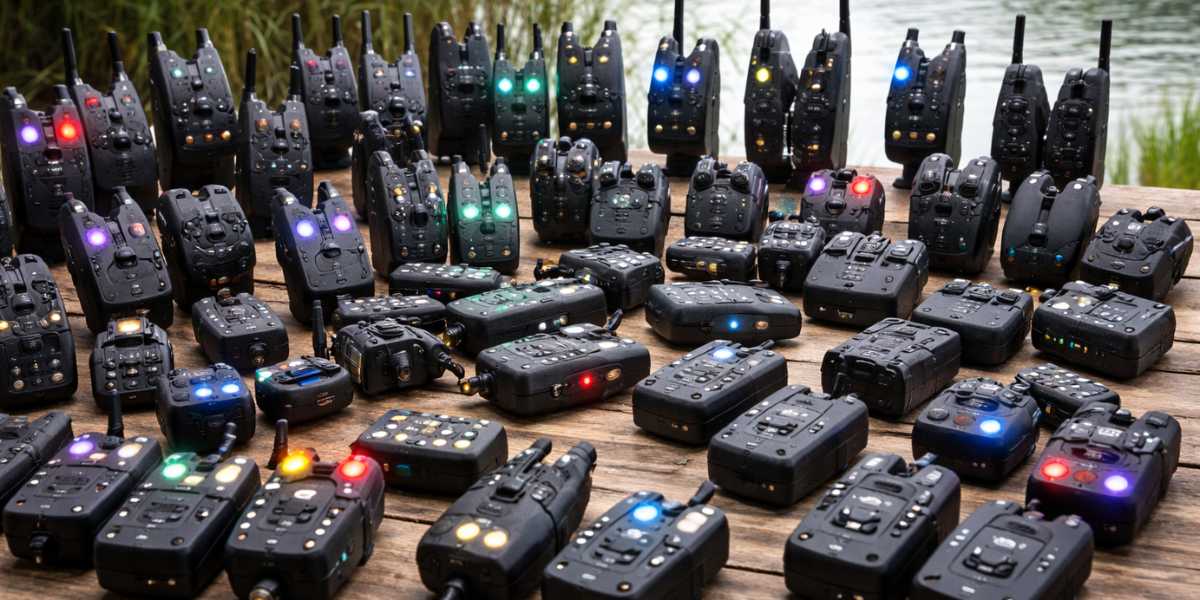
If you’ve been wondering how to choose the best fishing bite alarms, you’ll find it a confusing process. There’s a huge choice out there, from budget sets under £100 to premium systems costing over £500, and every manufacturer claims theirs is the best.
So here’s the real-world perspective on what actually matters and what’s just marketing fluff when comparing different alarms. If you’re looking for specific recommendations, check out our best bite alarms guide where we’ve tested and scored 12 of the top systems on the market.
Let’s break it all down properly.
Detection Systems | Build Quality | Sensitivity | Tone, Volume & LEDs | Receivers | Battery Life | Extra Features | Price vs Performance | FAQs
Detection Systems: Roller Wheel vs Vibration Sensing
This is the most fundamental decision. Roller wheel alarms are mechanical, they’ve been around for 50+ years, and you can actually feel the line moving across the roller. The majority of anglers have grown up using them, so are totally confident in their performance.
Piezo vibration alarms like the Delkim Txi-D detect line movement through vibration sensors in the alarm body itself. There are no moving parts to freeze up in winter, and they can be much more sensitive to ultra-light takes. Many anglers claim they pick up more bites than roller wheels.
Some newer alarms like the Wolf Icon Qi combine both systems, giving you vibration sensing and roller wheel detection in one alarm with independent adjustment.
Fact is, both methods work a treat if set up and used properly. Roller wheel alarms don’t freeze nearly as often as they used to, and vibration sensors have vastly improved in reliability. Choose which one you prefer, instead of fretting about which one is “better”.

Build Quality and Weatherproofing
Your alarms are going to be sat on a rod rest for hours (or days), in all weathers, so you need something that just works. Rain, condensation, freezing temperatures, baking sun, they’ve got to take it all and keep giving you 100% reliable performance.
Solidly sealed casings that keep moisture out of the circuitry is a must. Check reviews for any mention of water ingress or failed alarms after wet sessions. High-end brands like Delkim, Fox and Nash have this absolutely nailed, but even budget alarms should be fully weatherproof these days.
Look for IP ratings as a guide. The Trakker DB7-R carries an IP68 rating (fully submersible), while the Rippton BiteKeeper has IP66. The Gardner ATTs are genuinely 100% waterproof with no speaker ports or control openings for water to get in.
Plastic quality is important too. Cheaper alarms often use brittle casings that crack in cold weather or become brittle with UV exposure. Good alarms use tough materials that won’t let you down.
Sensitivity and Adjustability
You’ll need to be able to adjust the sensitivity of your alarms to suit the conditions. Tight to snags on a calm day? You want max sensitivity to detect the slightest hint. Windy day with waves on the line? Dial it back to prevent constant false indications.
The best alarms allow for a wide sensitivity range with easy adjustment. Clear and easily accessible controls are key, so you can adjust them without faffing about in the dark mid-night session.
Systems like the Fox RX Plus have additional features like See-Saw elimination that automatically filter out false indications. The Nash Siren R4 offers five intelligent sensitivity modes including Wave Sensing that ignores wind-induced line movement until a genuine take occurs.
These aren’t gimmicks. They genuinely help when conditions are tough.
Tone, Volume and LED Options
Seems like an afterthought but you’ll curse me if you’re on a busy lake and half a dozen other anglers are all running alarms. The ability to customise your tone means you’ll instantly know it’s yours when you hear it amongst the noise.
Volume control is important too. You want them low so as not to spook fish on the margins or upset the neighbours, but still audible from the inside of your bivvy. Independent volume on alarm heads and receiver allows for the most flexibility.
Multiple LED colours are more than just a bit flash. They’re genuinely useful for multi-rod setups. Assign a colour to each rod (left = red, middle = green, right = blue) and you know instantly which rod needs attention when you wake up to an alarm at 3am.
Receiver Quality and Range
This is the end point where you’ll actually hear your takes, so it needs to be good. Look for clear loud speakers that can cut through deep sleep. Vibration mode is great for completely silent operation when stealth is a priority.
Range (100m, 200m, 500m) is a spec that indicates the maximum transmission distance. The reality is you’re usually only 30-50m away from your rods so even 100m range is more than enough. Higher range generally equates to better signal strength that penetrates obstacles and vegetation better.
Modern receivers should mirror all of the alarm settings, LED colours, tones and so on. This way you get all of the information from the receiver and don’t need to look at the alarm heads.

Battery Life and Power Options
Nothing worse than alarms dying mid session. Standard battery-powered alarms will typically run for months on batteries and you can carry spares to swap them in seconds if needed.
Rechargeable systems like the Rippton BiteKeeper or Prologic Element save you money in the long run and are better for the environment. Just remember to charge them up before a session. Most can be topped up with a power bank whilst fishing though.
Battery level indicator is essential. You need to know when the power is running low so you can replace or recharge before it’s critical.
Additional Features Worth Having
Intelligent indication: Systems that differentiate between forward takes and drop-backs with different tones or LED patterns are very useful. They tell you what’s happening before you’ve even looked at the rods.
Snag ears: Proper snag ears that support your line on both sides of the alarm prevent false indications and protect your line from damage. They should be solid enough to take tight lines without flexing.
Night light function: Subtle illumination of the controls so you can adjust them in the dark without a head torch. Some like the Sonik Gizmo 2 even have integrated bivvy lights.
Memory functions: Alarms that remember your settings for the next session save time on setup. You shouldn’t need to configure everything each time you go out.
Latching options: The ability to set how long the alarm sounds and LEDs stay on after a take. Useful to know if you’ve had a take whilst away from the rods.
Price vs Performance: Finding Your Sweet Spot
Fact is, you don’t need to spend £600 on bite alarms to catch fish. Mid-range alarms in the £200-300 bracket for a set of three offer excellent reliability and all the features 99% of anglers actually use.
Premium alarms are more expensive due to better build quality, advanced features, extended warranties and proven longevity. If you fish often and want alarms that’ll last longer than your fishing career, they’re worth the investment.
Budget alarms under £150 for a three-alarm set have come on massively in recent years and will serve occasional anglers more than fine, though don’t expect the same refinement or longevity as premium alarms.
The sweet spot for most anglers is the mid-range bracket. Something like the Nash Siren R2, Fox Mini Micron X or Trakker DB7-R will give you pro-grade performance without the premium price tag. You can see how they all stack up in our full bite alarms guide.
Frequently Asked Questions
Common questions about bite alarm features and setup.
You can use different brand alarm heads on different rods, but they won’t pair with a single receiver from another brand. Each manufacturer uses proprietary wireless protocols. If you want receiver functionality, stick with one brand across all your alarm heads. The alarm heads themselves will still work standalone regardless of brand.
Both roller wheel and vibration sensing work equally well at night. What matters more for night fishing is having good LED visibility (multi-colour LEDs help identify which rod), a reliable receiver with vibration mode so it can wake you from sleep, and a night glow or low-level LED function so you can see the alarm without a head torch. Drop-back differential tones are especially useful at night when you can’t see your indicators clearly.
Lower the sensitivity setting, especially in windy conditions. Use bobbins to keep line tension consistent and reduce slack-line movement. Position your rods so the line isn’t catching crosswinds. Some alarms have built-in false-alarm cancellation like Fox’s See-Saw elimination or the Trakker DB7-R’s Intelli-Sense Mode that automatically ignore non-directional line movement. These features genuinely help in difficult conditions.
Yes, both roller wheel and vibration alarms work with braid. Braid is thinner and lighter than mono, so you may need to increase sensitivity slightly. On roller wheel alarms, braid sits in the roller groove differently to mono, but modern CNC-machined rollers handle this without issue. Vibration sensing alarms detect the vibration regardless of line type, so braid makes no practical difference to their performance.
Drop-back indication alerts you when a fish picks up your bait and swims towards you, creating slack line. Instead of the line pulling forward through the alarm, the bobbin drops and the line goes slack. Alarms with drop-back differential use a different tone (usually lower or alternating) to distinguish this from a forward take. It’s a genuinely useful feature because drop-backs can easily be missed without it.
Standard battery-powered alarms typically last several months to a year on a set of batteries depending on usage. Rechargeable alarms like the Rippton BiteKeeper last up to 20 days per charge on the alarm heads and 30 days on the receiver. The Steve Neville MK3 gets around a season from a single LRV08 battery. Always carry spares or a power bank as backup, and look for alarms with a battery level indicator so you’re never caught out.
Final Thoughts
Choosing a bite alarm doesn’t have to be complicated. Focus on detection reliability, build quality and weatherproofing, and make sure the sensitivity range covers the conditions you fish in. Everything else, the LED colours, app connectivity, bivvy light integration, is just icing on the cake.
If you’re ready to see how the top systems compare on all of these criteria, head over to our best bite alarms guide where we’ve tested and scored 12 alarms across build quality, detection, features and value for money.
Thanks for reading.
Tight lines!