

Best Distance Feeder Rods

A feeder rod that runs out of blank halfway through the cast will never put a loaded feeder where the fish are, and at 80 yards that shortfall is the whole session.
We have reviewed and scored the best distance feeder rods on build quality, casting and feel, playing fish and value for money, across all budgets.
Here's a summary table to get you started.
Our Top 9 Distance Feeder Rods at a Glance
| Product | Best for | Distance feeder rod | Best suited to |
|---|---|---|---|
| Premium (£300 and up) | |||
 | 9.1 Best overall distance feeder rod | Daiwa Tournament SLR | Best suited to:Anglers casting past 90 yards who want flagship performance |
| Upper-mid (£150 to £199) | |||
 | 8.7 Flagship materials without flagship money | Matrix Horizon X Ultra Pro | Best suited to:Match anglers chasing flagship carbon for less |
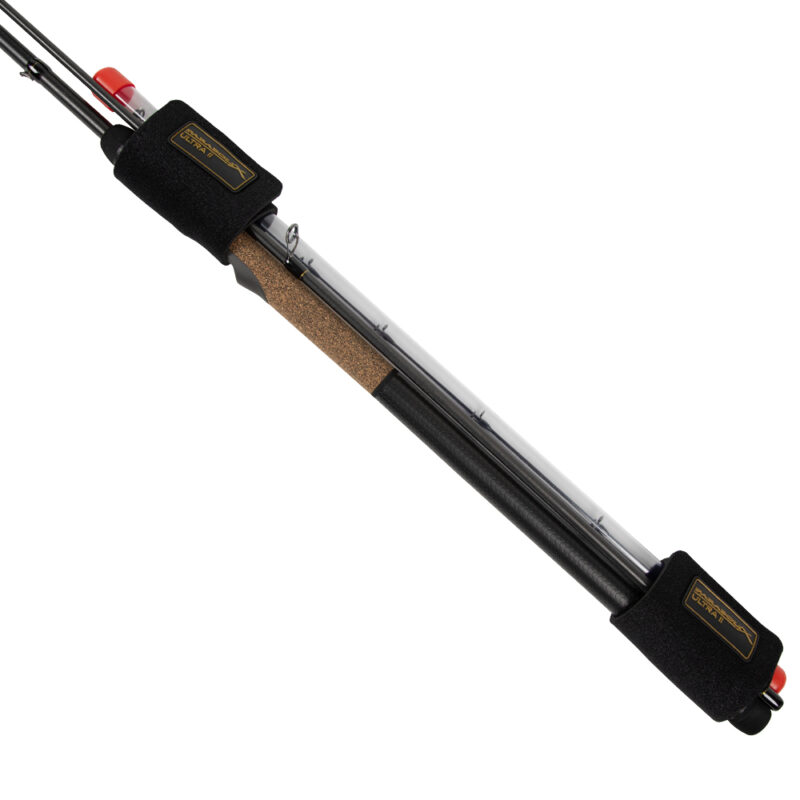 | 8.5 Best for big commercial carp | MAP Parabolix Ultra II SUV | Best suited to:Commercial anglers fishing 25 to 40 yards for bigger carp |
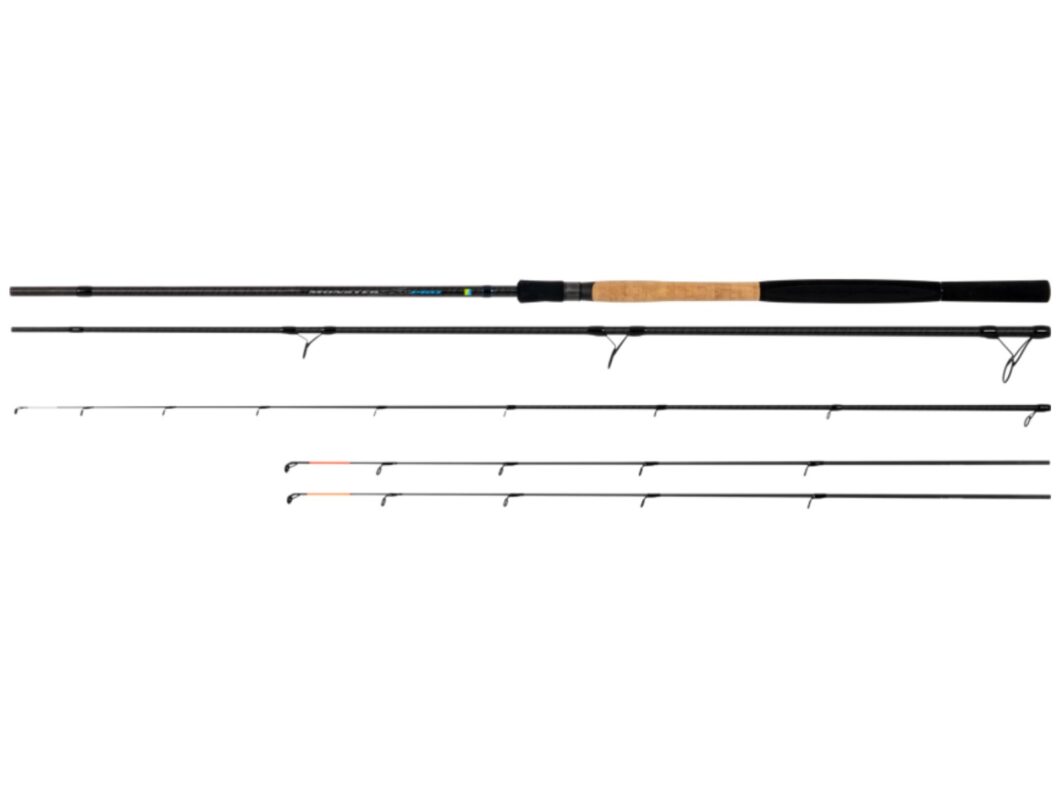 | 8.3 Big-water reach on a mid-premium budget | Preston Monster XTR Pro | Best suited to:Reservoir and big-pit anglers casting 90 to 110 yards |
| Mid-range (£99 to £120) | |||
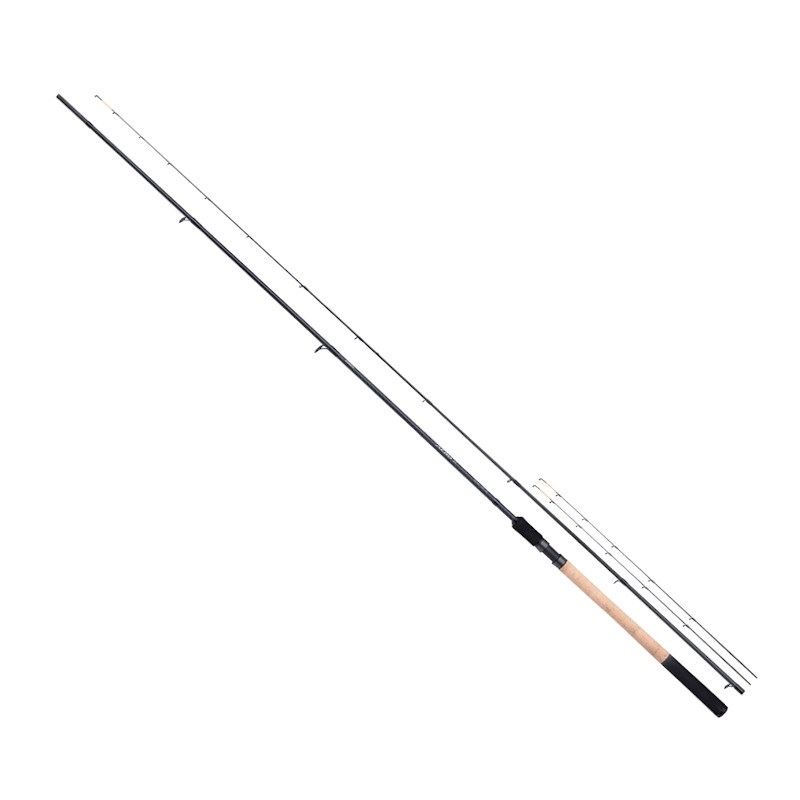 | 8.2 Heaviest casting window for the money | Shimano Aero X3 Distance HP | Best suited to:Anglers throwing 4oz to 5oz feeders at extreme range |
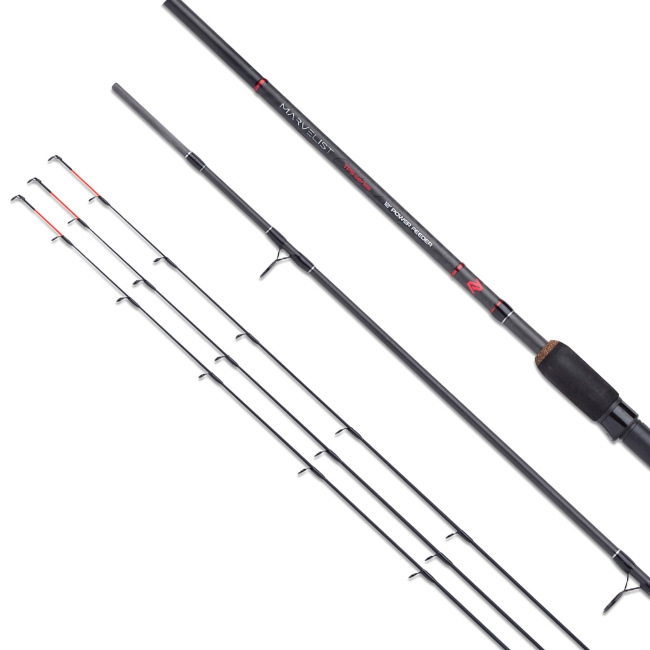 | 8.1 A river and big-pit all-rounder | Nytro Marvelist Power | Best suited to:Anglers splitting time between rivers and big pits |
 | 8.1 One range, several feeder jobs | MAP Extremis | Best suited to:Anglers who would rather not own two rods |
 | 8.0 Daiwa blank technology on a budget | Daiwa N'Zon Distance Special | Best suited to:Anglers wanting X45 carbon at the lowest price |
| Budget (under £60) | |||
 | 7.4 The cheapest way into distance feeder work | Shimano Aero X3 Distance Power | Best suited to:Newcomers to distance feeder fishing |
The rods below run from a 12ft blank that will cover most big-pit work to 14ft specialists built for the very biggest waters, and the reviews cover what each one asks of you in return.
What Makes A Rod Cast A Loaded Feeder A Long Way
A distance feeder rod is not simply a longer version of the rod you use on a commercial pond. It is built around one problem, which is moving a heavy, air-catching lump of metal and bait a long way without the blank folding up underneath it.
The Blank Has To Load Through Its Whole Length
The energy that throws a feeder comes out of the blank, not out of your arms. A rod that bends only in the tip has a short spring and it gives that energy back quickly, which is why a soft-tipped commercial rod dumps a heavy feeder short.
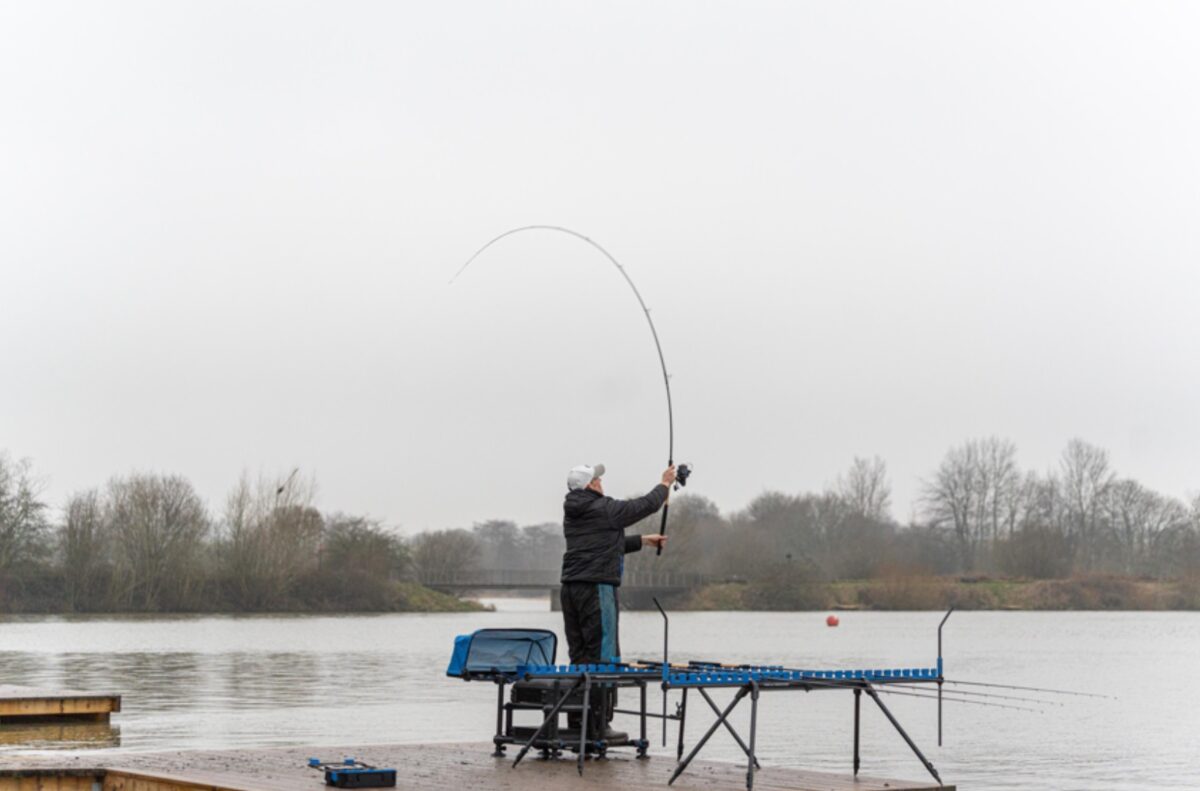
A distance blank keeps bending further down towards the butt as the load builds, so it stores more energy and releases it over a longer stroke. Steve Ringer's own casting advice hangs on the same point: he sets the feeder about a third of the way back down the rod before he casts, so that the whole rod works rather than just the tip.
Stiffness Through The Butt Is What Carries The Weight
Bending deep is only useful if the lower blank can take it. Push a 60g feeder with a soft butt section and the rod collapses at the point where it should be driving, so the cast feels heavy and lands short.
This is why the casting weight printed on a distance blank sits so much higher than on a general feeder rod. The rods here run from 100g up to 225g, and that number is describing reserve power in the bottom half of the rod as much as it is describing the feeder you are allowed to tie on.
Guides Decide How Much Of The Cast Survives
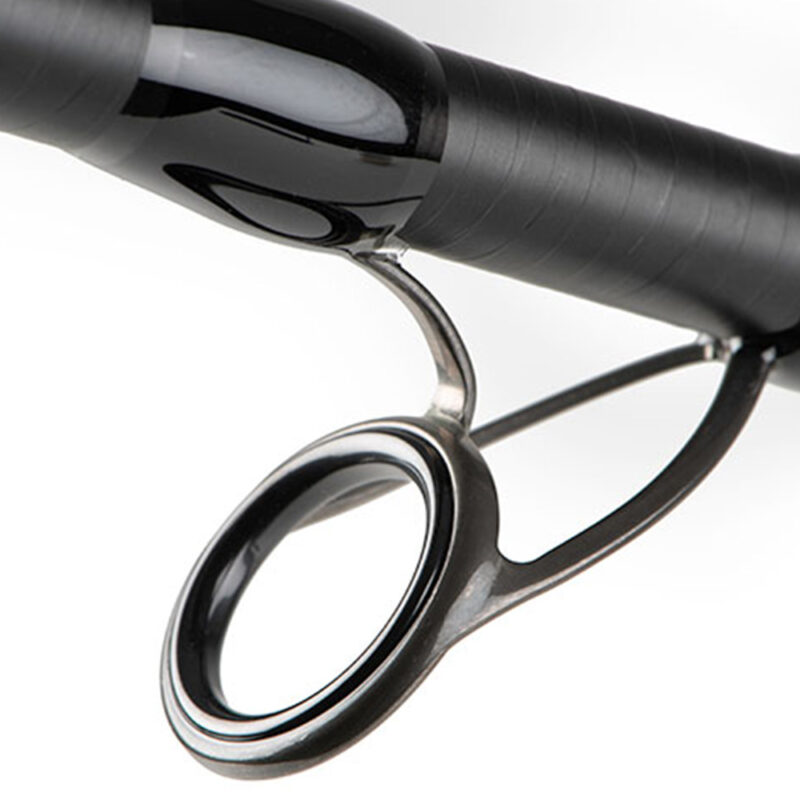
Line leaving a fixed spool reel comes off in wide coils. If the first guide is small and set close to the blank, those coils hit the frame and the friction takes yards off every cast, which is why distance rods carry noticeably bigger rings than commercial rods.
It matters even more if you fish braid with a shock leader, because the joining knot has to pass through every guide cleanly. Ringer's standing warning on leaders is to check that the rings, especially on the quivertip, are wide enough for that knot to go through without catching.
Choosing The Right Distance Feeder Rod For Your Water
Once you know what makes a rod cast, the buying decision comes down to three things: how far you actually need to fish, what you are throwing to get there, and what you want the tip to tell you when a fish picks the bait up.
Length Buys Range, And Costs You Handling
Longer rods cast further because the tip travels faster through the stroke and the line leaves at a higher angle, which keeps it clear of the water for longer. Angling Times put the practical brackets at 11ft to 12ft for fishing up to around 60 metres, with dedicated 13ft and 14ft rods needed to fish consistently beyond that.
The cost is felt everywhere else. A 14ft rod is heavier in the hand over a long session, more awkward in a tight peg, and harder to control at the net. If most of your fishing is inside 60 metres, the extra length is a penalty you pay all day for a distance you rarely need. For a wider view across every length and style of feeder rod, including the general-purpose 11ft and 12ft blanks, see our guide to the best feeder rods.
Match The Casting Weight To The Feeder You Really Use
The casting weight on the blank is a ceiling, not a target. The usual advice is to work comfortably below it rather than at it, because a rod worked at its limit every cast is both unpleasant to fish and hard on the blank.
So buy for the feeder you actually tie on. If you fish 40g to 60g cage feeders on a big pit, a rod rated to 100g or 120g gives you room to work in. Rods rated to 150g and beyond are for anglers genuinely throwing heavy payloads a long way, and on lighter feeders they simply feel dead. If most of your fishing is inside forty yards on a commercial, a softer rod built for the method is the better tool, and we have scored those separately in our guide to the best method feeder rods.
The Tip Is Your Bite Indicator, So Pick It For The Conditions
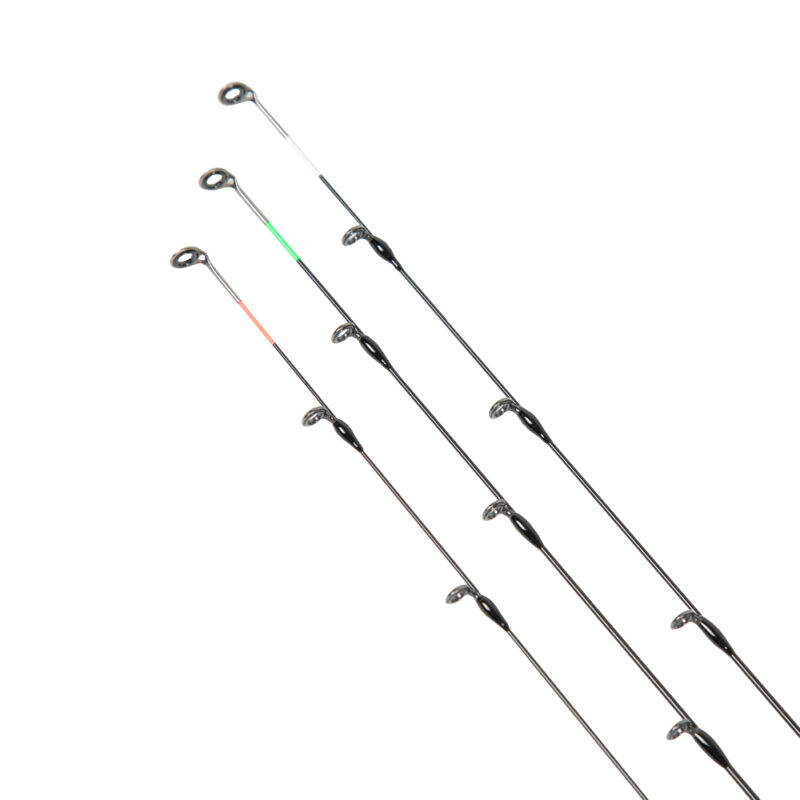
Distance rods come with a set of push-in quivertips rated in ounces, and that rating is the weight it takes to pull the tip round. Angling Times set out the working ranges plainly: half an ounce to an ounce for shy bites in calm water, one and a half to two and a half ounces as the general compromise, and three to five ounces for long casts, wind and bigger fish.
At range the choice is usually made for you. A soft tip that reads beautifully at 20 yards will sit bent over in the tow and the wind at 90, telling you nothing. Go heavy enough that the tip sits where you set it, then read the movement against that.
Playing A Fish A Long Way Out
Hooking a fish at 90 yards is a different job to hooking one at 20. There is a lot of line out, and mono stretches, so the strike has to travel a long way before it does anything at the hook. That is one reason braid has become normal for distance work, since it has a much thinner diameter for the same strength and it does not soak up the strike.
The trade is that braid has no give when a fish lunges under the rod tip. A shock leader puts some stretch back in, and it is what most anglers fishing at range use: Ringer runs 8lb to 12lb leader depending on the feeder weight and the size of fish, taking the heavier one for long casts.

Which Distance Feeder Rod Should You Buy?
| If you want | Distance feeder rod | Why | Watch out for |
|---|---|---|---|
| The best casting performance money buys | Daiwa Tournament SLR | Four lengths to 14ft on Daiwa's X45X blank, with the top variant rated to 180g for continental-match distances. | Flagship money, and overgunned if you rarely fish past 60 yards. |
| Flagship blank material for less | Matrix Horizon X Ultra Pro | Japanese ultra-high-modulus carbon with a lightweight carbon reel seat, in four variants from 12ft 80g to 13ft 7in 150g. | Matrix's own XBG guides rather than Fuji, and too new to have a long-term owner record. |
| To bully big carp on a commercial | MAP Parabolix Ultra II SUV | Reinforced lower sections give a 20 per cent power increase, and the through-action loads to the butt on a lunge. | MAP rate it to 45 metres, so it is not an open-water range rod. |
| To reach 100 yards without flagship money | Preston Monster XTR Pro | Casting windows from 175g to 225g across four variants, with American Tackle guides built to cut line coil on the cast. | The range stops at 13ft 9in, so there is no 14ft option. |
| A 14ft rod without spending a fortune | Shimano Aero X3 Distance HP | Rated to 150g in both 13ft and 14ft, with tips to 5oz and a Fuji DPS reel seat. | Sold as the Distance Power Heavy at some shops, so check which rod you are ordering. |
| One rod for rivers and big pits | Nytro Marvelist Power | A 12ft 100g and a 13ft 130g rated for 6lb to 10lb line, with the backbone to hold a feeder against flow. | Nytro do not publish the guide frame or ring material. |
| To cover several feeder jobs with one range | MAP Extremis | Six models across 10ft, 11ft and 12ft with casting weights from 15g to 65g, on Toray carbon with skeletal guides. | Casting weights stop at 65g, which is short of real distance work. |
| Daiwa blank technology on a budget | Daiwa N'Zon Distance Special | X45 anti-twist weave and HVF Nanoplus with Fuji hardware, and Daiwa publish 90 metres with a Method feeder on the 13ft. | Five variants in the family, so it takes reading to pick right. |
| The cheapest way to start | Shimano Aero X3 Distance Power | The same Diaflash blank, Seaguide XOG guides and Fuji seat as the rod above it, in a 12ft 110g and a 13ft 120g. | Tops out at 120g, so heavy feeders at long range are outside it. |
You can find out more about these recommended rods including where to buy them, in their respective reviews below:
The Best Distance Feeder Rods We Have Reviewed
Match the rod to the feeder you tie on and the range you actually fish, and the rest of the decision gets a lot easier.
Rods for 90 yards and beyond | Rods for 60 to 90 yards
Daiwa Tournament SLR
Best overall distance feeder rod
How It Scored
Fuji VSS seat, SeaGuide TDG skeleton guides and V-Joint Alpha spigots, on Daiwa's X45X Full Shield Bias Carbon blank.
Four lengths to 14ft with the top variant rated to 180g, and 90 to 100 yard casts with a 60g feeder on the 13ft.
The HVF Nanoplus blank keeps bending as pressure builds rather than locking out, so a lunge at range does not go straight to the hooklink.
Flagship money, which only makes sense if you genuinely fish at the range it is built for.
Four lengths, an X45X Full Shield Bias Carbon blank and a 180g casting weight on the 14ft put the Tournament SLR at the top of the Daiwa feeder range. It is priced accordingly, so the question is whether you fish far enough to need it.
Four lengths cover 11ft through 14ft, all built on Daiwa's X45X Full Shield Bias Carbon blank with HVF Nanoplus construction and V-Joint Alpha spigots between sections. The 14ft tops out at 180g casting weight, which is genuine continental-match territory.
Hardware is what you would expect from the top of the Daiwa feeder range. Fuji VSS reel seat, SeaGuide TDG skeleton guides so thin they barely add swing weight, and a cork and Duplon Armlock handle finished with laser-etched Tournament branding.
Daiwa pitch the 13ft at 90 to 100 yard casting with a 60g feeder on big-pit and reservoir waters, which is the standard expected at this level.
The Tournament SLR is not cheap, and that is honestly the only caveat against it. The 13ft is the rod I would put my own money on for serious open-water work.
Pros
- ✓Full Daiwa Tournament-tier construction at flagship level
- ✓X45X Full Shield Bias Carbon known for reduced blank twist
- ✓Four lengths from 11ft to 14ft for any open-water range
- ✓SeaGuide TDG skeleton guides barely add swing weight
- ✓V-Joint Alpha spigots keep the blank curve smooth through the sections
- ✓Three quivertips supplied at 2oz, 3oz and 4oz
Cons
- ✕Genuine flagship price, not for casual anglers
- ✕Only worth the money if you fish 90 yards-plus regularly
- ✕The 14ft 180g variant is more rod than most anglers need
Matrix Horizon X Ultra Pro
Flagship materials without flagship money
How It Scored
Japanese UHM carbon blank, XBG RS Silicon Nitride guides and a carbon reel seat in place of the usual aluminium DPS.
UHM carbon releases energy faster than mid-modulus layups, and the enlarged guide frames are built to cut friction on the forward stroke.
The slim high-modulus blank transmits more of the fight, though the new guide system has no long-term record under heavy carp yet.
Flagship blank material and a genuine generational step up on the guide train and reel seat.
Japanese ultra-high-modulus carbon is the blank material that usually sits on flagship feeder rods from the big Japanese brands, and on the Horizon X Ultra Pro it comes with a carbon reel seat and Matrix's own oversized guide train.
Four variants cover 12ft 80g, 13ft 1in at 100g and 130g, and 13ft 7in at 150g. All are built on Japanese ultra-high-modulus carbon with Matrix's XBG RS Silicon Nitride guide train, an ultra-lightweight carbon reel seat and a slim minimal black EVA handle.
The big point of difference on this generation is the guide train. Matrix have moved off the Fuji K-series that sat on the predecessor and onto their own XBG RS Silicon Nitride system, with an enlarged frame meant to cut line friction on long casts with braid or a shock leader.
Four variants cover 12ft 80g, 13ft 1in at 100g and 130g, and 13ft 7in at 150g. For me the 13ft 1in 100g is the sweet spot for typical UK big-pit work, handling 80 to 100 yard casts comfortably with a 3oz to 5oz feeder.
The XBG guide system is the main point of difference on this generation, though it is Matrix's own design rather than Fuji-branded, which matters to some anglers.
Pros
- ✓Japanese ultra-high-modulus carbon is known for fast tip recovery
- ✓Matrix XBG Silicon Nitride guides reduce friction on long casts
- ✓Ultra-lightweight carbon reel seat keeps the rod nicely balanced
- ✓Four lengths from 12ft 80g up to 13ft 7in 150g
- ✓Casting windows reach 150g for genuine long-range work
- ✓Clear generational step up from the previous Horizon X Pro
Cons
- ✕Matrix's own XBG guides rather than Fuji SiC
- ✕The XBG guide system is new enough to have no long-term owner record
- ✕Still a serious investment for most match anglers
MAP Parabolix Ultra II SUV
Best for big commercial carp
How It Scored
Ultra-high Nano Carbon with MAP's enhanced resin system, oversized double-leg Fuji guides and a Fuji reel seat.
Tuned for accuracy at 25 to 40 yards with a 30g to 40g feeder rather than for absolute range, and MAP's own 45 metre rating says so.
The non-locking through-action loads to the butt on a big commercial carp instead of spring-loading against the hooklink.
Flagship components, but the power-biased parabolic blank only earns its price if big-carp commercial work is your fishing.
The MAP Parabolix Ultra II SUV sits at the top of MAP's flagship Parabolix Ultra II commercial family, a stepped-up version built for bigger commercial carp on method and bomb tactics. It is the rod you reach for when 30g to 40g feeders and 6lb-plus carp are the everyday job.
SUV on the butt means Stepped Up Version, and what you are stepping up is lifting power: same blank mandrel as the standard Ultra II, but reinforced lower sections for what MAP call a 20 per cent power increase. They rate it for fishing comfortably up to 45 metres.
That 45 metre rating is deliberate rather than a shortfall. This is the rod for the angler whose distance problem is not range but LOAD: a 40g method feeder and an 8lb-plus commercial carp at 40 yards asks more of a blank than a light feeder at 90 yards does, and the reinforced lower sections are the answer to that rather than to reach.
The hardware reads genuinely premium. Oversized double-leg Fuji guides per MAP, a Fuji reel seat, the Winn Grip anti-slip rubberised handle, three matched carbon quivertips at 0.5oz, 1oz and 1.5oz, plus a padded sleeve, neoprene wraps and a hook keeper.
There is a clear gap in the commercial feeder market for a flagship rod with real reserve power for the bigger fish, and the Ultra II SUV fills it without compromise.
Pros
- ✓Ultra-high Nano Carbon blank is known for flagship-level build
- ✓Parabolic through-action really helps with big carp lunges
- ✓SUV power band gives 20 per cent more lifting power
- ✓Oversized Fuji guides cut friction on heavier feeder casts
- ✓Three carbon quivertips supplied at 0.5oz, 1oz and 1.5oz
- ✓Padded sleeve, neoprene wraps and hook keeper in the box
Cons
- ✕Rated to 45 metres, so it runs out of range before the distance rods here do
- ✕The Winn Grip rubberised handle is a matter of taste against cork
- ✕Supplied tips top out at 1.5oz, which is light for windy open water
Preston Monster XTR Pro
Big-water reach on a mid-premium budget
How It Scored
X-Wrap Carbon with reinforced lower sections, American Tackle Distance Specials guides and a Fuji reel seat.
Casting windows of 175g to 225g across four variants, with the 4.0m 200g covering 90 to 110 yards on big pits.
The blank flexes through the middle as pressure builds, which is what stops a hard shock reaching the hooklink on the first run.
Real component upgrades over the predecessor, at a price well below the flagship bracket.
Casting windows from 175g up to 225g across four variants make the Monster XTR Pro one of the most powerful rods here, built on Preston's X-Wrap Carbon blank with reinforced lower sections on the longer models.
Four variants cover 3.6m (11ft 10in) through 4.2m (13ft 9in) with casting windows from 175g up to 225g. There is no 14ft variant in the range, which is worth knowing if you are specifically after that length.
Guides are American Tackle Distance Specials, whose ring shape and tilt are meant to stop line coiling as it leaves the reel.
The reel seat is Fuji and the handle is Grade A cork with EVA sections, matched to the Preston template most match anglers already know.
The 4.0m 200g is the volume choice for typical UK big-pit and reservoir work at 90 to 110 yards with feeders up to around 7oz. The 4.2m 225g steps into pushing-beyond-110-yards territory, which is an underserved corner of the market.
What I like most is the coherence of the engineering. Preston have not just given the Monster a new paint job, they have upgraded the blank material, the guide train and the reel seat in a way you feel across the cast and the fight.
Pros
- ✓X-Wrap Carbon blank really helps with heavy feeder casts
- ✓Reinforced lower sections handle 5oz feeders at distance
- ✓American Tackle guide train known for low friction
- ✓Four variants from 3.6m to 4.2m for every range
- ✓Fuji reel seat with Grade A cork and EVA handle
- ✓Trusted Preston brand at mid-premium distance pricing
Cons
- ✕No 14ft option in the range
- ✕A lot more expensive than the outgoing Monster Xtreme Distance
- ✕Power-biased, so it is not a finesse rod for short-range work
Shimano Aero X3 Distance HP
Heaviest casting window for the money
How It Scored
Diaflash cross-wrapped carbon with a Fuji DPS seat, though the Seaguide XOG guides sit below the Fuji trains above it.
Rated to 150g across both variants with tips to 5oz, a casting window normally found on rods costing a good deal more.
The Diaflash blank flexes through the middle section as pressure builds, with the 14ft variant asking for more controlled lifting at the net.
Genuine Diaflash construction and Fuji hardware, with the 14ft length as the thing you cannot easily buy elsewhere at the price.
The Shimano Aero X3 Distance HP is the heaviest-casting rod in the X3 Distance sub-family. Shimano and their retailers also list it as the Aero X3 Distance Power Heavy, and the two names are the same rod, which is worth knowing before you order.
Two variants cover it: a 13ft 150g and a 14ft 150g, both 3-piece. Each is supplied with three interchangeable carbon quivertips rated at 3oz, 4oz and 5oz for matching indication to the casting payload.
Component spec is solid for the mid-tier bracket: Diaflash blank construction with cross-wrapped carbon tape reducing twist under load, Seaguide XOG anti-tangle guides, a Fuji DPS down-locking reel seat, and a cork and EVA composite handle.
Most anglers will want the 13ft 150g for big-pit and reservoir work at 80 to 100 yards with 4oz to 5oz feeders. The 14ft 150g is the big-water specialist for the 110 yards-plus chuck, and very few rods at this money offer a 14ft option at all.
The honest positioning is what I like most here. Shimano have priced it where the components land in the range, without the Spiral X Core blank spec the flagship carries.
Pros
- ✓Diaflash cross-wrap blank known for reduced twist under load
- ✓SeaGuide XOG anti-tangle guides shed line cleanly on fast casts
- ✓Two-length range includes a 14ft 150g option
- ✓Three carbon quivertips supplied at 3oz, 4oz and 5oz
- ✓Fuji DPS reel seat with cork and EVA composite handle
- ✓Well-trusted Shimano Aero heritage at mid-range pricing
Cons
- ✕SeaGuide XOG guides are solid but not Fuji K-series
- ✕Sold under two different names, which makes ordering the right rod harder
- ✕Heavier casting window than most commercial anglers need
Nytro Marvelist Power
A river and big-pit all-rounder
How It Scored
A 30T/40T diamond carbon-curve blank with a reinforcing carbon wrap at the handle, though the guide spec is unpublished.
Progressive through-action loading into the middle section, with 100g and 130g windows across the two lengths.
Rated 6lb to 10lb line, with enough spine reserve to hold a feeder against river flow and still show a bite through the tip.
Real casting muscle and Tommy Pickering design pedigree, without the brand presence of the bigger names.
Former World Champion Tommy Pickering is the designer behind the Marvelist range, and the Power Feeder is its heaviest-casting variant, sitting alongside the Light Carp, Carp and Allrounder in a Blyth-based UK line-up.
Two variants cover the Power Feeder: a 12ft rated to 100g and a 13ft rated to 130g. Each comes with matched 2.9mm carbon quivertips, 1.5oz, 2oz and 2.5oz on the 12ft, stepping up to 2oz, 2.5oz and 3oz on the 13ft.
A 30T/40T diamond carbon-curve blank with progressive through-action, epoxy-varnished guide wrapping, a screw-down reel seat and a flat-grip cork and duplon handle is solid for the price tier. Nytro do not publish frame or ring material in their spec sheet, so I will not invent numbers.
Nytro rate the rod for 6lb to 10lb line, which covers typical big-pit carp and bream work on both variants. For river work with a heavier feeder against the flow, the 13ft 130g has the power to hold a payload steady while the tip still registers bites.
The Tommy Pickering-era design thinking behind it is the part I rate. It is a rod built on proper distance-angler pedigree rather than marketing noise.
Pros
- ✓30T and 40T Diamond Carbon blank known for good spine reserves
- ✓Progressive through-action handles bigger fish at range
- ✓Carbon wrap on the handle reinforces the casting stress point
- ✓12ft 100g and 13ft 130g cover big-pit and river casting
- ✓Flat-grip cork and duplon handle stays warm in the cold
- ✓Rated for 6lb to 10lb line
Cons
- ✕Rated to 6lb to 10lb line, so it is under-gunned for specimen carp at range
- ✕Only two lengths, with nothing above 13ft for the biggest waters
- ✕Nytro do not publish guide frame or ring material
- ✕Smaller brand presence than Preston, Matrix or Daiwa
MAP Extremis
One range, several feeder jobs
How It Scored
Toray ultra-high modulus carbon with American Tackle stainless TI Force Air skeletal guides and a screw-down reel seat.
Casting weights from 15g to 65g across six models, which covers a lot of ground for one range but stops short of true long-range payloads.
The parabolic through-action cushions bigger fish, helped by a 190g 11ft blank that stays comfortable over a session.
Custom-build guide hardware and Japanese carbon at a price where neither is normal.
Skeletal guides are the sort of thing you see on custom rod builds rather than on factory feeder rods at this price, and the MAP Extremis carries American Tackle stainless TI Force Air units.
The rest of the build matches that impression. Ultra-high modulus carbon blanks sourced from Toray in Japan give a crisp action, the rubber handle is genuinely comfortable in the wet, and the screw-down reel seat holds solid even under method feeder tactics.
The range covers a proper spread of fishing. Standard models run 15-25g (10ft), 20-40g (11ft) and 25-55g (12ft), and the SUV models step up to 25-45g (10ft), 25-65g (11ft) and 25-65g (12ft) for heavier commercial and distance work.
At 190g for the 11ft variant, the Extremis is competitively lightweight for an all-session rod. MAP have put real development effort into the parabolic through-action, and it shows when you are playing bigger fish at distance.
The parabolic through-action is where MAP have put the development effort, and it shows when you are playing bigger fish at distance.
Pros
- ✓Ultra-high modulus Toray Japanese carbon is known for crisp action
- ✓American Tackle TI Force Air guides usually seen on custom builds
- ✓Standard and SUV models across 10ft, 11ft and 12ft
- ✓Casting weights from 15g up to 65g for serious range flexibility
- ✓Parabolic through-action cushions big fish at distance
- ✓Light in the hand at 190g for the 11ft variant
Cons
- ✕Casting weights top out at 65g, which is short of true distance payloads
- ✕No variant longer than 12ft, so line angle at range is limited
- ✕The rubber handle is a love-it-or-hate-it design against cork
- ✕The parabolic action trades tip crispness for cushioning, so bite registration at long range is softer than on a stiffer distance blank
Daiwa N'Zon Distance Special
Daiwa blank technology on a budget
How It Scored
X45 anti-twist weave and HVF Nanoplus with a Fuji DPS seat and a V-Joint reinforced spigot.
Daiwa publish 90 metres with a Method feeder on the 13ft, and the X45 cross-wrap keeps the blank tracking straight.
The HVF Nanoplus blank flexes through the middle as the fight builds, with backbone left to steer fish at 80 yards plus.
Genuine Daiwa blank technology and Fuji hardware at the lowest price of any rod here carrying X45.
X45 anti-twist weave and HVF Nanoplus are the two Daiwa blank technologies that matter, and the N'Zon Distance Special carries both without the flagship price. It is a five-variant family sitting below the N'Zon Pro Staff.
X45 cross-wraps carbon at 45 degrees to cut blank twist under casting load, and you feel it as a cleaner release under a heavier payload, with the blank tracking straight instead of rolling slightly off-axis.
Five variants cover the Distance Special: 11ft 80g Method, 12ft 90g Feeder, 12ft 120g Power, 13ft 150g Power, and 14ft 150g Power. Lighter variants are 2+3 section rods, heavier variants are 3+3, and each is supplied with three CT carbon quivertips.
Daiwa put the 13ft Distance Special at 90 metres with a Method feeder and up to 80 metres with a window or rocket-style cage feeder, which is a genuinely useful published figure and matches the 70 to 100 yard work I would buy it for.
Component spec is solid for the mid-premium bracket: X45 and HVF Nanoplus blank, V-Joint reinforced spigot, SeaGuide stainless-steel anti-tangle guides, Fuji DPS down-locking reel seat, and a Cork/EVA Armlock handle with a down-locking fore grip. Daiwa do not publish the ring insert material.
Pros
- ✓X45 cross-wrapped carbon known for reduced blank twist
- ✓V-Joint reinforced spigot keeps casting pressure flowing
- ✓Five variants from 11ft 80g Method to 14ft 150g Power
- ✓SeaGuide stainless anti-tangle frames across the range
- ✓Fuji DPS reel seat with Cork and EVA Armlock handle
- ✓Daiwa publish a 90 metre Method feeder figure for the 13ft
Cons
- ✕Ring insert material is not published, so the guide spec cannot be checked
- ✕Daiwa do not publish the ring insert material
- ✕Sits below the Pro Staff, so it does not have the flagship tip recovery
Shimano Aero X3 Distance Power
The cheapest way into distance feeder work
How It Scored
Diaflash construction with a Fuji DPS seat and Seaguide XOG guides, the same fittings used further up the X3 Distance range.
Windows of 110g and 120g suit 60 to 80 yard work, but the blank does not have the tip response of high-modulus carbon.
Flexes through the middle on 2lb to 5lb commercial carp, with enough length on the 13ft to steer fish around a tight peg.
Sub-£60 for a rod that shares its blank construction and fittings with the model above it.
Sixty pounds does not usually buy a rod that will put a feeder 80 yards out, which is what makes the Aero X3 Distance Power worth a look. It is the middle step of the X3 Distance sub-family, above the lighter Distance models and below the Distance HP.
Two variants cover it: a 12ft rated to 110g in two pieces, and a 13ft rated to 120g in three. The 12ft ships with 1.5oz, 2oz and 3oz carbon quivertips, the 13ft with 2oz, 3oz and 4oz.
Diaflash blank construction with cross-wrapped carbon tape reducing twist under load, Seaguide XOG anti-tangle guides, a Fuji DPS down-locking reel seat and a cork and EVA composite handle are all shared with the pricier Distance HP sibling, which is solid for the budget tier.
For me the 13ft 120g is the volume choice for typical UK big-pit and reservoir work at 60 to 80 yards with 3oz to 4oz feeders. The 12ft 110g suits tighter pegs or anglers who prefer the shorter length for precision casting.
What I like most about the Distance Power is how much of the range's technology you get for the money. Same Diaflash blank, same Seaguide XOG guides, same Fuji reel seat, just without the 150g casting window the Distance HP adds.
Pros
- ✓Diaflash blank cross-wraps carbon tape to reduce twist
- ✓SeaGuide XOG anti-tangle guides shed line on fast casts
- ✓Two lengths at 12ft 110g and 13ft 120g for distance work
- ✓Fuji DPS down-locking reel seat for reliable hold
- ✓Cork and EVA composite handle feels premium for the money
- ✓Shares its blank construction and fittings with the pricier Distance HP
Cons
- ✕Budget-tier blank lacks the casting finesse of the rods above it
- ✕Tops out at 120g, so heavy feeders at long range are outside its window
- ✕No 14ft option for continental-scale distances
Frequently Asked Questions
What is a distance feeder rod?
A distance feeder rod is a stiff-butted, fast-tipped rod built to launch heavier cage or pellet feeders a long way without the blank collapsing under the load. Lengths generally run from 12ft to around 14ft, and casting windows on dedicated distance blanks reach 150g and beyond.
How far should a distance feeder rod cast?
A well-matched distance rod and reel should comfortably reach 80 to 100 yards with a loaded cage feeder. Daiwa, for instance, publish 90 metres with a Method feeder for the 13ft N'Zon Distance Special. If you do not regularly fish past 60 yards, an all-rounder or method rod will serve you better and feel less overpowered at close range.
What length distance feeder rod do I need?
Angling Times put the practical brackets at 11ft to 12ft for fishing up to around 60 metres, with dedicated 13ft and 14ft rods needed to fish consistently beyond that. The longer rod gives you more tip speed and a better line angle, and costs you handling comfort in a tight peg and control at the net.
What casting weight do I need for a distance rod?
Match the casting weight to the feeders you actually use rather than to the top-end number printed on the blank, and work comfortably below that ceiling rather than at it. For most UK big-pit and reservoir distance work a rod rated to 100g or 120g gives you room to work in, with 150g and above reserved for genuinely heavy payloads at long range.
Are 13ft rods worth it over 12ft?
If you regularly need to cast past 70 yards, yes. A 13ft rod gives you faster tip speed and a better line angle off the top, both of which add distance without adding effort. At 50 yards or less the extra length becomes a handling penalty for close-in work, so a 12ft is the better pick for mixed venues.
Final Thoughts
If you fish big open waters or reservoirs where reach is the limiting factor, the Daiwa Tournament SLR is the highest-scoring rod of the nine and will reward an experienced caster with genuine flagship performance.
For tighter budgets, the Shimano Aero X3 Distance Power punches well above its sub-£60 price and is a genuine starter distance rod rather than a compromise. Between those two, the Preston Monster XTR Pro and the Daiwa N'Zon Distance Special are the two I would look at hardest.
Thanks for reading.
Tight Lines!