

Best Bivvies For Carp Fishing

A bivvy is the one bit of kit you cannot test in the shop. It looks fine on the showroom floor with the heating on, and you only find out what the fabric and the frame are really made of at three in the morning when the wind gets up and the rain starts coming in sideways.
To help with this dilemma, we reviewed and scored 15 of the best bivvies for carp fishing across different sessions and in a real variety of weather, from 1 man and 2 man bivvies to brolly systems, judging each on build quality, stability and weather resistance, ease of setup and portability, and value for money.
Right, let's get straight into it.
Our Top 15 Bivvies and Brolly Systems at a Glance
| Product | Best for | Bivvy | Best suited to |
|---|---|---|---|
| 2 man bivvies | |||
 | 8.9 Best 2-Man Bivvy Overall | Nash Titan T2 Camo Pro Fishing Bivvy | Best suited to:Long weekend sessions with two bedchairs and all the kit inside |
 | 8.6 Most Luxurious 2-Man Bivvy | RidgeMonkey Escape XF2 2 Man Bivvy | Best suited to:Basecamp comfort on vehicle-accessible swims |
 | 8.7 Most Compact Premium Bivvy | RidgeMonkey Escape XF2 Compact Bivvy V2 | Best suited to:Long social sessions where two anglers want serious engineering over their heads |
 | 8.0 A Popular Mid-Range 2-Man Bivvy | Fox EOS Pro 2 Man Bivvy | Best suited to:A first proper 2-man shelter with everything in the box |
 | 7.8 A Popular Entry-Level 2-Man Bivvy | Fox EOS II Bivvy, 2 Person | Best suited to:First-time buyers of a genuine 2-man shelter on the tightest budget |
| 1 man bivvies | |||
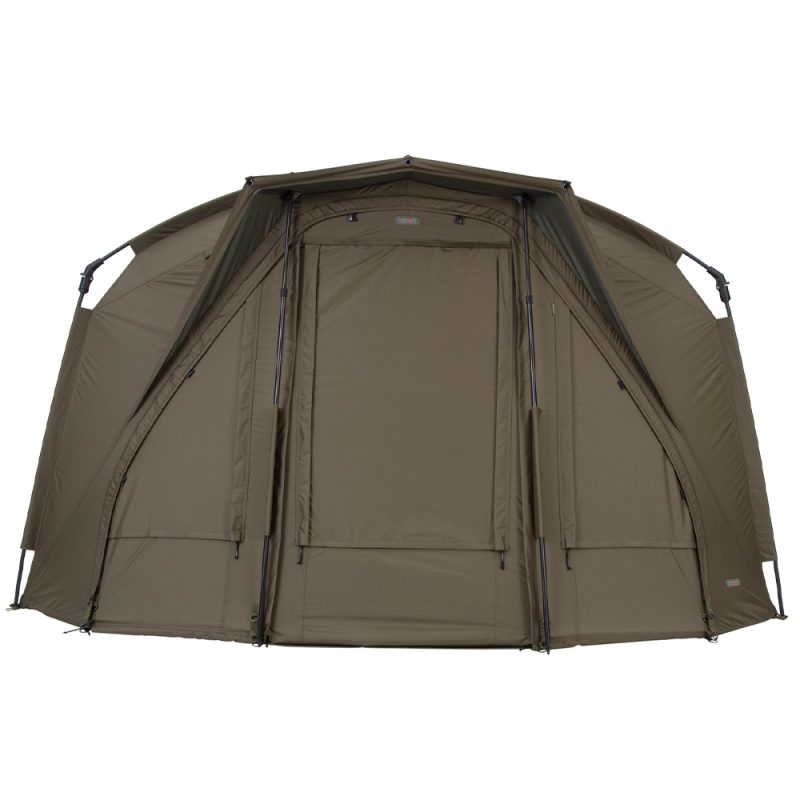 | 8.9 Best 1-Man Bivvy Overall | Trakker Tempest RS 100 | Best suited to:Anglers who want to be fishing, not pitching, in any weather |
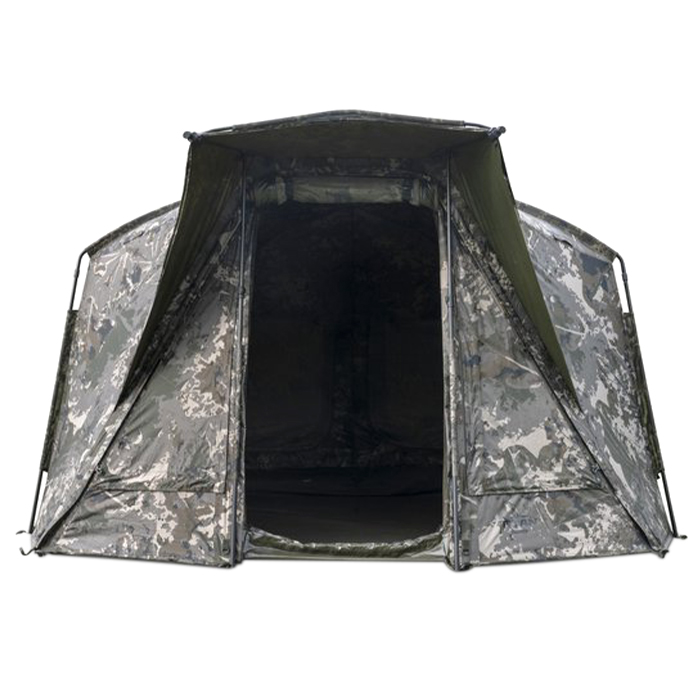 | 8.7 One Of The Best Titans On The Market | Nash Titan T1 Camo Pro Fishing Bivvy | Best suited to:Solo session anglers who want to sit upright and stay dry all week |
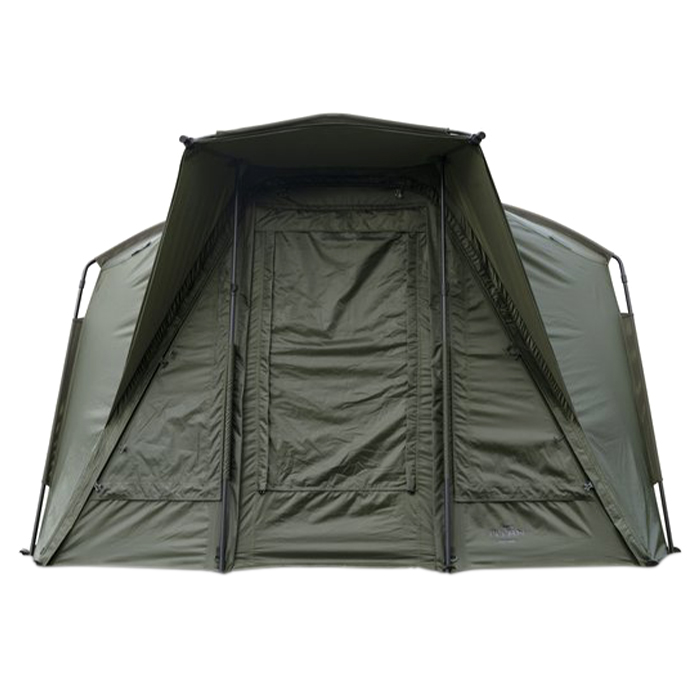 | 8.4 Nash's Most Popular 1-Man Bivvy | Nash Titan T1 Fishing Bivvy | Best suited to:Real Titan build quality at the most accessible price in the range |
 | 8.3 A Complete Premium Compact Bivvy | Wychwood Epic Tactical Compact Bivvy Full System | Best suited to:Mobile and quick-session anglers who want flagship fabric in a light package |
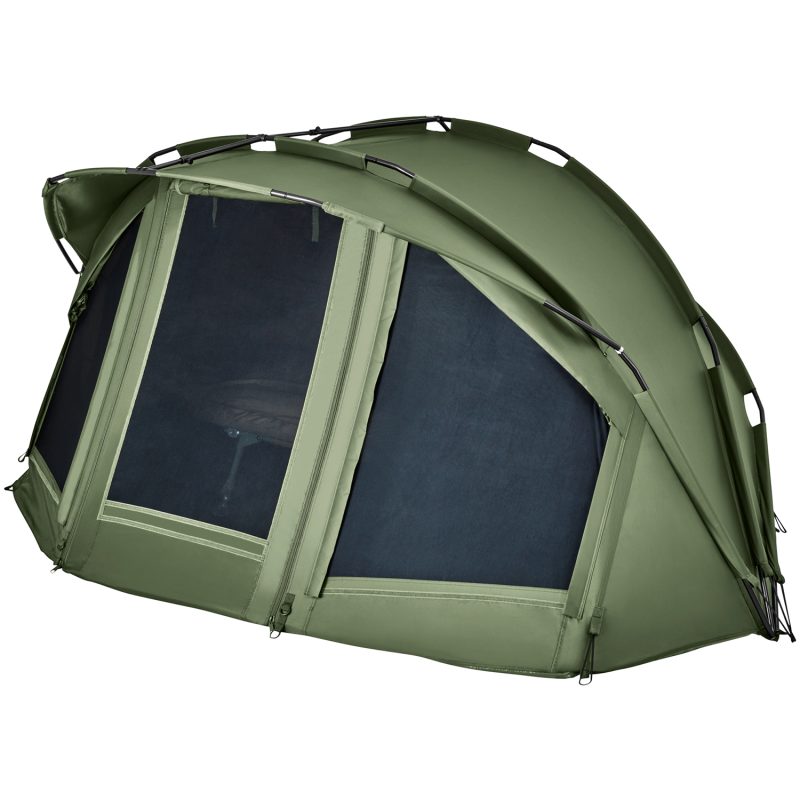 | 8.4 Best Budget 1-Man Bivvy | Trakker SLX V3 | Best suited to:Anglers who want a shelter that just works, whatever the forecast, without flagship money |
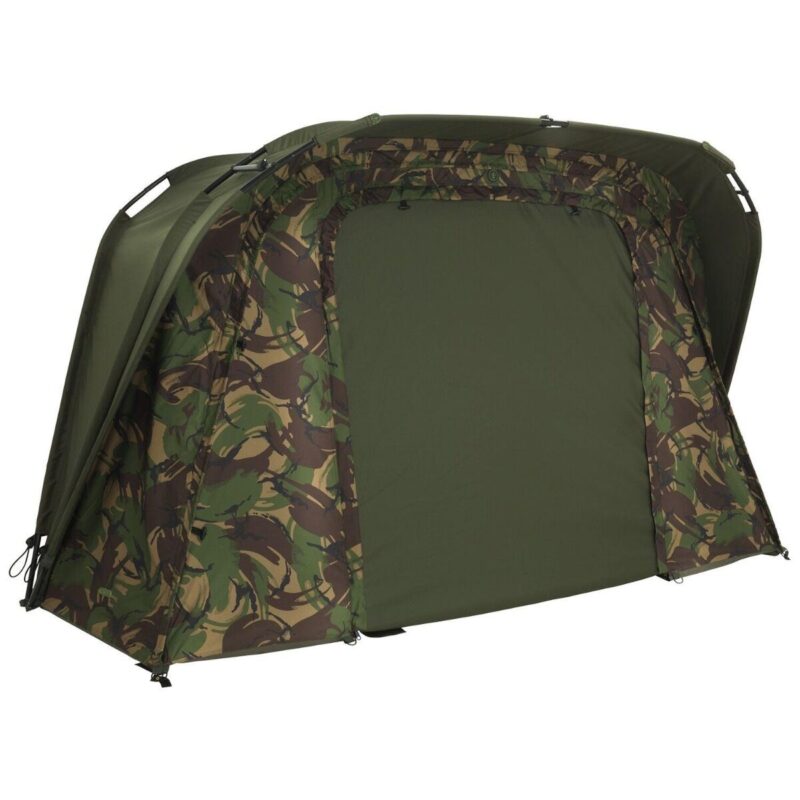 | 7.7 Top Lightweight 1-Man Bivvy | Wychwood Tactical Compact Bivvy | Best suited to:Roving and stalking anglers who count every kilo |
 | 8.0 A Popular Entry-Level Nash Bivvy | Nash Titan Hide Bivvy | Best suited to:Short mobile sessions with real Nash Titan construction on your back |
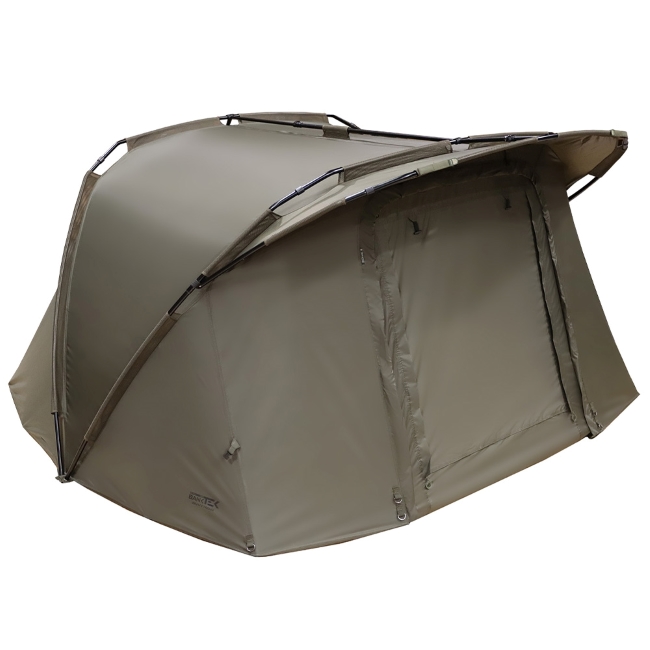 | 8.0 A Very Popular Low-Cost 1-Man Bivvy | Sonik Bank-Tek Bivvy 1 Man | Best suited to:Mobile session anglers who want 10,000mm fabric and a full kit for the least money |
| Brolly systems | |||
 | 8.8 Top-Rated Brolly System | Trakker Tempest RS Brolly System | Best suited to:Anglers who want the fastest pitch on the bank with the best fabric over it |
 | 7.5 Best Budget Brolly System | Prologic Element 65 Brolly Full System Camo | Best suited to:First-time brolly-system buyers and mobile anglers on a budget |
How We Test Bivvies
Every bivvy in this guide has been tested on the bank, not reviewed from a spec sheet. I've been fishing with bivvies like these for over two decades, from £200 budget overnighters to £1,200 flagship session shelters, and I know what separates real bankside kit from marketing hype.
For this guide, I've run each shelter through the conditions you actually fish in: UK rain, crosswinds, sub-zero mornings, muggy summer nights and long sessions where cheap fabric and budget frames start to fail. Every score in the summary table above has been earned bankside, not on paper.
The decision process considers build quality, fabric specification, weather resistance, setup time, packed weight and value for money, the factors that actually make a difference when you're sat in a shelter at 4am in the rain. Price point matters too, so the list covers entry-level £200 picks through to flagship 2-man basecamps.
All the bivvies below have earned their place, whether you're after a lightweight 1-man for mobile sessions, a full-profile 2-man for long stays, or a rapid-erect brolly system for quick overnighters. If you already know the type you need, our best 1 man bivvies, best 2 man bivvies and best budget bivvies guides narrow the field.

Which Bivvy Should You Buy?
| If you | Bivvy | Why | Watch out for |
|---|---|---|---|
| Fish long weekends with two bedchairs and want the toughest Nash 2-man | Nash Titan T2 Camo Pro Fishing Bivvy | Armoured 20,000mm Aquasense, the fast-erect Titan frame and the inner capsule in the box. | 21kg loaded, and the groundsheet is extra. |
| Want to be fishing within a minute of arriving, whatever the weather | Trakker Tempest RS 100 | 25,000mm Aquatexx and a Rapid Knuckle frame that locks storm-secure on your own. | A true 1-man footprint at flagship money. |
| Set up a basecamp on a swim you can drive to | RidgeMonkey Escape XF2 2 Man Bivvy | The X-frame gives rock-solid stability and genuinely premium interior space. | Heavy and bulky; not a shelter for any walk. |
| Fish solo for a week and want to sit upright in comfort | Nash Titan T1 Camo Pro Fishing Bivvy | Best-in-class 183cm headroom with the flagship fabric and the inner capsule included. | 16kg assembled; groundsheet and overwrap are extra. |
| Want genuine Titan construction at the most accessible price | Nash Titan T1 Fishing Bivvy | The same centre block and rigid frame as the Pro models, with the groundsheet supplied. | 10,000mm fabric, half the Camo Pro rating. |
| Share long social sessions and want the most engineered 2-man here | RidgeMonkey Escape XF2 Compact Bivvy V2 | 300D HydroX at 20,000mm, an X-frame pitch under four minutes and V2 condensation fixes. | The heaviest shelter on this page at 40.5kg loaded. |
| Want a first proper 2-man with the extras in the box | Fox EOS Pro 2 Man Bivvy | Storm poles, groundsheet and pegs included, with a three-panel letter-box door. | 8,000mm fabric and a frame that flexes in gusts. |
| Move swims often but refuse to give up flagship fabric | Wychwood Epic Tactical Compact Bivvy Full System | 20,000mm fabric, a sub-two-minute pitch and the whole system at 11.6kg. | 130cm internal height is low-profile. |
| Want one dependable shelter for every season without flagship money | Trakker SLX V3 | No roof sag, no flap and a twin-skin inner that all but ends condensation. | More involved to pitch and pack than the quick shelters. |
| Are buying your first 2-man on the tightest budget | Fox EOS II Bivvy, 2 Person | A genuine two-bedchair interior and a premium three-panel door at entry-level money. | 8,000mm fabric and a two-rib frame that moves in gusts. |
| Rove and stalk with everything on your back | Wychwood Tactical Compact Bivvy | Four kilos bare in 10,000mm ripstop, and it slips inside a rod holdall. | A two-rib 16mm frame and a single rear vent. |
| Want a lightweight Nash Titan for short mobile sessions | Nash Titan Hide Bivvy | Published 6.2kg on a real Titan centre boss frame with the Camo Pro vapour shield. | No groundsheet or storm poles supplied. |
| Want 10,000mm fabric and a full kit for the least money | Sonik Bank-Tek Bivvy 1 Man | D-section aluminium poles, a three-panel door and the groundsheet all included. | 135cm height; the pole frame flexes in heavy gusts. |
| Want a brolly system with the fastest pitch and the best fabric available | Trakker Tempest RS Brolly System | 25,000mm Aquatexx and a Rapid Knuckle System that goes up in under a minute solo. | Flagship money with the caps and inner capsule sold separately. |
| Want a fishing-ready brolly system for under £200 | Prologic Element 65 Brolly Full System Camo | Frame, four storm poles, groundsheet, infill panel and pegs all in one bag at 7.6kg. | A flexi-glass frame that moves in heavy wind. |
You can find out more about these recommended bivvies and brolly systems, including where to buy them, in their respective reviews below:
The 15 Best Bivvies For Carp Fishing Reviewed
The order below runs broadly top-scoring to lower-scoring, but every product here has earned its place for a specific use case. Use the classification tags to find the right fit for your fishing.
2 man bivvies | 1 man bivvies | Brolly systems | Budget picks
Nash Titan T2 Camo Pro Fishing Bivvy
Best 2-Man Bivvy Overall
How It Scored
Nash Titan centre block with an armoured, camo-patterned outer that resists scuffs season after season.
20,000mm Aquasense fabric and the 2023 gutter redesign that stops water coming in when you unzip in a downpour.
Rigid frame pitches solo in under three minutes, but 21kg fully loaded is barrow-served.
Inner mesh capsule included; the groundsheet is a separate purchase at flagship money.
The Nash Titan T2 Camo Pro is the flagship 2-man in the Titan range. It is a shelter built for long weekend sessions with two bedchairs deployed and room for cooking kit, tackle and a rucksack alongside.
What you pay for over the standard T2 is the armoured outer coating and camo pattern. The armouring proves itself over seasons rather than days, extending how long the shelter looks and performs like new when you set up on gravel pegs each week.
The Aquasense fabric at 20,000mm hydrostatic head puts weather resistance firmly in extreme territory. The 2023 canopy redesign with integrated gutter system solves the water ingress issue that plagued earlier Titans when you unzip in a downpour.
The rigid frame lives up to Nash's fast-erect claim. Under three minutes solo is realistic with practice, no separate poles to thread or joints to fumble with in the dark.
The weight is the honest caveat. At 21kg fully loaded this is barrow-served kit, not something to carry on your back.
For long-session anglers who want Nash's best 2-man armour and a fast-erect rigid frame, the T2 Camo Pro is our top 2-man pick.
Pros
- ✓20,000mm HH Aquasense armoured nylon with blackout pigment gives full extreme-weather capability and a cooler interior on summer days
- ✓Fast-erect rigid frame pitches solo in under three minutes, no separate poles or threaded joints to fumble with in the dark
- ✓Huge 348cm W x 318cm D interior comfortably fits two wide bedchairs plus bedside station for cooking kit and tackle
- ✓Inner mesh capsule included as standard, which saves money versus competitors who charge for it separately
- ✓Camo Pro armoured coating and camo pattern add meaningful scuff resistance and swim-blending over the standard T2
Cons
- ✕Heavy at 21kg fully loaded
- ✕Groundsheet is sold separately, which feels a frustrating omission at the flagship price when budget brollies include one as standard
Trakker Tempest RS 100
Best 1-Man Bivvy Overall
How It Scored
Patented hinge block and Rapid Knuckle System on a bombproof flat-back frame with magnetic rod straps and mesh pockets.
25,000mm Aquatexx hydrostatic head with six-vent Adaptive Ventilation that manages condensation on cold nights.
Fully storm-secure in under a minute on your own, the fastest pitch on this page.
Premium money for a one-man shelter, justified by the fabric and the mechanism.
The Trakker Tempest RS 100 sets the benchmark for rapid-erect 1-man shelters. From the moment you pull it from the bag, the patented hinge block and Rapid Knuckle System let you go from fully wrapped to storm-secure in well under a minute, even solo in rough weather.
The build is superb throughout. 25,000mm hydrostatic head Aquatexx fabric is industry-leading for bankside shelters, and the bombproof flat-back design is paired with adaptive ventilation and genuinely useful detail touches like two magnetic rod straps, internal mesh pockets and storm gutter.
What stands out is how little the rapid-erect design sacrifices in comfort. There is loads of usable floor space, smart pockets everywhere, and headroom that lets you sit up on a bedchair without hunching.
The six-vent Adaptive Ventilation system manages condensation on cold nights where other quick-erect rivals struggle.
For anglers who value fishing time over gear time, this is genuinely the fastest, most reliably weatherproof one-man bivvy on the market. It is a true evolution in instant shelters.
Pros
- ✓Sets up fully storm-secure in under a minute solo
- ✓No sacrifice in comfort or features despite speed focus
- ✓Bombproof weatherproofing and premium build quality
- ✓Excellent headroom for all-day comfort
- ✓Flatter-back suits tight or awkward swim positions
Cons
- ✕Premium price point implied by market positioning
- ✕One-man capacity only
RidgeMonkey Escape XF2 2 Man Bivvy
Most Luxurious 2-Man Bivvy
How It Scored
Aluminium X-frame locked through a tensioned central spine, heavy-duty YKK zips and a sewn-in groundsheet.
No wobble or flap under wind load, rain beads off the 300D HydroX skin and condensation stays minimal.
Removable inner capsule and door options adapt to conditions, but this is heavy, bulky basecamp kit.
Top-tier engineering at the highest price here, so value is the trade you accept for the space.
The RidgeMonkey Escape XF2 has become the go-to premium 2-man shelter for anglers who will not compromise on comfort, protection or space on longer sessions in changeable UK weather conditions.
It feels rock solid once up. The aluminium X-frame locks the structure firmly through a tensioned central spine, and on gusty wet nights there is no wobble or fabric flap that budget rivals develop under wind load.
One of the biggest benefits is how versatile the setup is. The removable inner capsule and multi-configuration front door options mean you can tailor the shelter to suit cold nights, warm days, or damp muggy sessions without needing accessory purchases. The 300D HydroX outer skin is extremely dependable, with rain beading off and the fully sewn-in groundsheet keeping everything warm and dry. Condensation stays minimal even in colder months.
The honest caveat is that this is not a light or small shelter. The XF2 is proper basecamp-style kit for vehicle-accessible swims, not a short-walk or mobile-angler shelter. For the bulk you gain rock-solid stability and genuinely premium interior space.
For anglers looking for a high-spec, all-weather 2-man shelter that combines size with rigid-frame stability, the XF2 is a serious bit of kit that delivers across the board.
Pros
- ✓Extremely stable and rigid once erected
- ✓Highly waterproof with rain beading off effectively
- ✓Versatile setup adaptable to various weather conditions
- ✓Fully sewn-in groundsheet keeps you warm and dry
- ✓Minimal condensation even in cold conditions
Cons
- ✕Heavy and bulky to transport
- ✕Not suitable as a lightweight or compact option
Nash Titan T1 Camo Pro Fishing Bivvy
One Of The Best Titans On The Market
How It Scored
Armoured Aquasense outer and the Titan centre block, with four double-zipped climate panels.
20,000mm hydrostatic head matches the flagship T2, with the inner mesh capsule included as standard.
Solo pitch in under three minutes with no poles to thread, though 16kg assembled means a barrow.
Premium 1-man money, with the groundsheet and overwrap sold separately.
The Nash Titan T1 Camo Pro is Nash's premium 1-man shelter, sharing the armoured Aquasense fabric treatment with the T2 Camo Pro and delivering best-in-class headroom for its segment.
What separates this from the standard Titan T1 is the armoured outer coating and camo pattern. The coating proves itself over seasons rather than days when you barrow the shelter across gravel pegs each week, extending useful life meaningfully for heavy users.
20,000mm Aquasense hydrostatic head puts weather resistance in full extreme territory, and four double-zipped climate panels handle condensation better than most 1-man rivals. The removable inner mesh capsule is included as standard, unlike some premium competitors who charge separately.
At 183cm peak and 158cm door height, you get enough internal space to sit upright on a bedchair without ducking, which transforms cooking and rig-tying on long sessions.
The honest caveat is weight. 16kg assembled puts this firmly in barrow-served territory rather than mobile or roving use.
For anglers who want the Nash Titan range at 1-man scale with armoured premium finish, the T1 Camo Pro is one of the best Titans on the market.
Pros
- ✓20,000mm Aquasense hydrostatic head with armoured blackout nylon matches the flagship T2 spec on weather resistance
- ✓Best-in-class headroom in the 1-man segment at 183cm peak and 158cm door height, room to sit upright on a bedchair
- ✓Four double-zipped climate panels offer the most sophisticated ventilation setup in 1-man shelters at this price
- ✓Removable inner mesh capsule included as standard, saving money versus rivals who charge for it separately
- ✓Fast-erect rigid frame pitches solo in under three minutes with no separate poles to thread in the dark
Cons
- ✕16kg assembled is heavier than other bivvies, so not ideal for mobile or roving anglers
- ✕Groundsheet and overwrap sold as separate accessories, which adds meaningfully to the total kit cost
Nash Titan T1 Fishing Bivvy
Nash's Most Popular 1-Man Bivvy
How It Scored
The same Titan centre block and rigid frame as the Pro models, with the flagship letterbox door and rod straps.
10,000mm fabric with an extended storm peak and internal vapour shield that do real work on wet nights.
A repeatable five-minute solo pitch once learnt, and 13kg bare puts it on the barrow.
The most accessible route into genuine Titan construction, with the HD groundsheet supplied.
The Nash Titan T1 brings the Titan T-range platform to a wider audience than the pricier Camo Pro or T2 variants, keeping the Titan centre block, fast-assembly rigid frame, extended forward storm peak and internal vapour shield at a more accessible mid-premium price band.
Where it earns its score is engineering, not fabric spec. The rigid frame is more structurally confident than the pole-and-hinge 1-man bivvies sitting in the £250 to £400 bracket, and the Titan centre block locks the whole shelter in place without relying on pegs to do structural work.
Weather performance is solid, with the extended storm peak and vapour shield doing real work on wet nights.
Honest caveat is weight and published-spec transparency. At 13kg bare the T1 is session-grade kit built for barrow-served swims, not mobile anglers doing long walks from the car.
The standard Titan fabric is rated at 10,000mm hydrostatic head, solid mid-tier waterproofing but half the 20,000mm specification on the Camo Pro variant, so extended winter exposure is where the Camo Pro upgrade earns its keep.
For anglers who want real Nash Titan build quality without stretching to the armoured Camo Pro coating, the T1 is a professional-grade 1-man shelter at a fair entry price into the Titan family.
Pros
- ✓Real Nash Titan platform construction at a notably lower price than the Camo Pro variant
- ✓Fast-assembly rigid frame delivers a repeatable five-minute solo pitch once learnt
- ✓Extended forward storm peak and internal vapour shield manage rain and condensation well
- ✓Twin magnetic rod retaining straps and letterbox storm door match the flagship T1 feature set
- ✓HD groundsheet with fold-back doorway protect panel comes supplied as standard
Cons
- ✕Standard T1 fabric is rated at 10,000mm hydrostatic head, half the 20,000mm on the Camo Pro variant
- ✕At 13kg bare the T1 is too heavy for mobile or stalking use, barrow-served sessions only
RidgeMonkey Escape XF2 Compact Bivvy V2
Most Compact Premium Bivvy
How It Scored
300D ripstop HydroX skin with CPAI-84 flame resistance and UV50+ on a tensioned X-frame.
20,000mm hydrostatic head, front peak vapour shield and 360-degree vents that fix the old Escape condensation issue.
Pitches in under four minutes solo without threading a pole, but 40.5kg loaded is barrow-only.
Serious money, but the inner capsule and the door options are in the box rather than extra.
The RidgeMonkey Escape XF2 Compact V2 is a premium 2-man bivvy built around serious engineering and top-tier materials. The 300D HydroX fabric delivers 20,000mm hydrostatic head with CPAI-84 flame resistance and UV50+ rating, putting weather protection at the top of the industry range.
The X-frame construction is what really sets this shelter apart. The frame holds its shape through tensioned rigidity rather than storm poles or pegged guy lines, so you pitch solo in under four minutes without threading a single pole.
V2 upgrades address the condensation issues that affected earlier Escape models. The front peak vapour shield, removable inner mesh capsule and 360-degree adjustable vents work together to keep moisture under control on multi-night sessions.
The honest caveat is weight. At 40.5kg fully loaded this is barrow-only kit, not something for short day sessions or mobile anglers.
For barrow-served long sessions on established swims, you are getting one of the most engineered shelters on the market.
Pros
- ✓300D ripstop HydroX skin with 20,000mm hydrostatic head, CPAI-84 flame resistance and UV50+ rating, top-of-industry fabric spec
- ✓X-frame construction pitches in under four minutes solo with no pole threading or joint assembly to fumble with
- ✓V2 upgrades solve the condensation issues of earlier Escape models with front peak vapour shield and 360-degree adjustable vents
- ✓Multi-configuration front door with breathable mesh or clear PVC panel option for visibility during heavy rain
- ✓Probably the best long session / social bivvy out there
Cons
- ✕40.5kg total weight rules it out for mobile or roving anglers without barrow access
- ✕Compact in the name refers to the XF2 internal hierarchy, not compact versus the wider shelter market, so packed size is above average for the 2-man segment
Fox EOS Pro 2 Man Bivvy
A Popular Mid-Range 2-Man Bivvy
How It Scored
Moulded keyed elbow joints keep pole alignment repeatable, on a fan-out pram-hood frame.
8,000mm hydrostatic head is honest mid-tier, and the fan-out frame flexes more than a centre block in gusts.
Under three minutes solo from the first attempt, at an 11kg carry weight.
Storm poles, groundsheet and heavy-duty pegs included at mid-budget money.
The Fox EOS Pro 2 Person Bivvy targets the mid-budget end of the 2-person session shelter market and lands an honest value proposition, putting a genuine Fox-engineered shelter into the sub-£350 bracket where most rivals are stripped-back hinge-frame budget kit.
Where it earns its score is the spec balance and what is included in the box. 305cm width gives the full 2-person interior with two bedchairs side by side and 160cm height for full sit-up headroom.
The moulded keyed elbow joint frame is meaningfully more refined than budget rivals, the two-way letter-box door system with mesh, PVC and solid panel options is a feature usually reserved for pricier shelters, and storm poles, a lightweight groundsheet and heavy-duty pegs all ship in the carry bag as standard.
Honest caveats are the fabric specification and frame rigidity. 8000mm hydrostatic head is mid-tier rather than the premium 10,000mm or 20,000mm Aquatexx and Aquasense fabrics on the Nash Titan and RidgeMonkey flagships, and the fan-out frame is more flexible than a rigid centre-block design under heavy gusts.
For anglers who want a credible Fox 2-person shelter without paying flagship money, the EOS Pro is one of the strongest value picks in the mid-budget bracket.
Pros
- ✓305cm width gives genuine 2-person interior with room for two bedchairs side by side
- ✓Storm poles, lightweight groundsheet and heavy-duty pegs all included as standard at sub-£350
- ✓Two-way letter-box style door with mesh, PVC and solid panel options is a premium feature at this price tier
- ✓Moulded keyed elbow joint frame keeps pole alignment repeatable pitch after pitch
- ✓Fan-out pram-hood design pitches in under three minutes solo from first attempt
Cons
- ✕8000mm hydrostatic head is honest mid-tier waterproofing, below premium 10,000mm to 20,000mm ratings on Nash and RidgeMonkey shelters
- ✕11kg carry weight is too heavy for off-the-barrow walks of any distance, which is consistent with all 2-person session shelters
Wychwood Epic Tactical Compact Bivvy Full System
A Complete Premium Compact Bivvy
How It Scored
Five-rib aluminium frame with a pivoting lever cam and an integrated forward peak with rain guttering.
20,000mm hydrostatic head fabric in the same tier as the RidgeMonkey and Nash Camo Pro shelters.
A sub-two-minute solo pitch at 11.6kg for the whole system.
The full-system bundle saves a real sum in accessories, but it is still premium compact money.
The Wychwood Epic Tactical Compact Bivvy Full System is a premium lightweight compact shelter aimed at mobile and quick-session anglers who want flagship-tier fabric and a one-action pitch without the weight and bulk of a full-profile bivvy.
Where it earns its score is the combination. 20,000mm hydrostatic head fabric puts it into the same weatherproof tier as much pricier RidgeMonkey and Nash Camo Pro shelters, while the pivoting lever cam mechanism delivers a sub-two-minute solo pitch that quick-erect fans want.
The full-system bundle includes the Tactical Quarter Cap, Solid Infill Front, Mozzy Front, HD zip-in groundsheet, deluxe carry bag, tension straps and pegs, which would add £150 to £200 of standalone accessories to a stripped-frame rival.
Honest caveat is the 130cm internal height, which puts the Compact in the low-profile segment. You can sit up on a bedchair inside, it is just tighter headroom than a full-profile 180cm shelter gives you.
Anglers who prioritise quick pitch, light carry and compact pack size over spacious sit-up room will find that trade makes sense.
At 11.6kg full-system weight this also sits meaningfully lighter than a 13kg bare Nash Titan T1, making it a strong option for off-the-barrow and vehicle-accessible swims where quick setup matters.
Pros
- ✓Pivoting lever cam allows a genuine sub-two-minute quick-erect pitch
- ✓20,000mm hydrostatic head fabric matches flagship-tier weatherproofing
- ✓11.6kg full-system weight is genuinely light for a premium compact shelter
- ✓Full System bundle includes quarter cap, solid infill front, mozzy front, HD groundsheet, tension straps and pegs, worth a premium in standalone accessories
- ✓Integrated forward peak with rain guttering keeps water clear of the door during heavy rain
Cons
- ✕130cm internal height is the compact/low-profile segment standard, sitting up on a bedchair is possible but tight compared to full-profile 180cm bivvies
- ✕5-rib aluminium frame is solid but does not match the engineering of a Nash Titan centre block or RidgeMonkey X-frame
Trakker SLX V3
Best Budget 1-Man Bivvy
How It Scored
Solid structure with no roof sag in heavy rain and a rock-solid door system.
10,000mm fabric and a twin-skin inner capsule that cuts condensation almost completely.
Straightforward but more involved than the rapid-erect shelters, and pack-down is not the fastest.
Serious weatherproofing and night-long comfort at mid-tier money.
The Trakker SLX V3 is a staple on UK lakes and riversides for good reason. After using it through dreary British winter sessions and muggy spring overnighters, it proves itself as a genuinely all-scenarios mid-tier 1-man shelter.
There is a feeling of confidence that comes with the SLX V3's solid structure. No annoying sag in the roof when it pours down, and no flapping sides on gustier nights.
The twin-skin inner capsule makes a real difference on colder nights, cutting condensation almost completely where single-skin budget rivals leak morning drips onto sleeping bags.
Details like the zipped rear vent and the rock-solid door system make it genuinely practical whether you are doing a quick one-nighter or a longer session. Setup and pack-down are both straightforward, nothing too fiddly, but still more substantial than ultra-quick rapid-erect shelters.
For the price, the feature set is hard to beat: serious weatherproofing, true night-long comfort, proven UK bankside credibility and enough space for a proper session's worth of gear. This is the bivvy that just keeps working whatever the bank, season or forecast throws at you.
It is our best budget 1-man bivvy for anglers who want real mid-tier spec without paying flagship money.
Pros
- ✓No roof sag in heavy rain
- ✓Minimal flapping in wind
- ✓Twin-skin significantly reduces condensation on cold nights
- ✓Genuinely practical door system and rear vent
- ✓Suitable for quick overnighters and longer sessions
Cons
- ✕Setup more involved than ultra-quick shelters
- ✕Pack-down not the fastest on the market
Fox EOS II Bivvy, 2 Person
A Popular Entry-Level 2-Man Bivvy
How It Scored
Two-rib pram-hood frame and 8,000mm fabric, with a larger improved peak over the door.
Fine for normal UK rain, but you will hear and feel the frame move in heavy gusts.
Under three minutes solo with no learning curve, and a full single-bag carry.
A recognised Fox badge, three-panel door and a full accessory bundle at the lowest credible price.
The Fox EOS II 2 Person Bivvy targets first-time buyers of a genuine 2-person session shelter, landing a recognised Fox badge and a full accessory bundle at the lowest credible price point in the segment. It is an honest entry-level shelter that manages its trade-offs visibly rather than hiding them.
Where it earns its score is the balance of what Fox include for the money. 300cm width gives full two-bedchair interior, 150cm height is proper sit-up headroom for both anglers, the 112cm extra-wide letter-box door with three interchangeable panels (solid, clear PVC, mozzi mesh) is a premium-tier feature at entry-level pricing, and the larger improved peak is a real upgrade over the original EOS.
Lightweight groundsheet and heavy-duty T-pegs ship in the zipped carry bag as standard.
Honest caveats are the 8000mm hydrostatic head rating (entry-tier, below the 10,000mm Nash Titan and the 20,000mm premium ranges), and the two-rib pram-hood frame which flexes more under heavy gusts than a rigid centre-block design would. For extended winter sessions under sustained storms, a higher-rated shelter is worth the upgrade.
For first-time buyers who want a recognised-brand 2-person shelter at the lowest credible money without dropping to no-name budget-shop rivals, the EOS II is a strong pick.
Pros
- ✓300cm width and 150cm height gives genuine two-bedchair interior with full sit-up headroom for both anglers
- ✓112cm extra-wide letter-box door with three interchangeable panels (solid, clear PVC, mozzi mesh) is a premium-tier feature at entry-level pricing
- ✓Larger improved peak over the door is a real upgrade on the original EOS and deflects rain clear of the zip line
- ✓Lightweight groundsheet and heavy-duty T-pegs supplied in the zipped carry bag, full single-bag carry
- ✓Two-rib pram-hood frame pitches in under three minutes solo with no learning curve
Cons
- ✕8000mm hydrostatic head is honest entry-tier waterproofing, below the 10,000mm Nash Titan rating and well below the 20,000mm premium shelters
- ✕Two-rib pram-hood frame is more flexible than rigid centre-block designs, so in heavy gusts you will hear and feel more movement than on pricier shelters
Wychwood Tactical Compact Bivvy
Top Lightweight 1-Man Bivvy
How It Scored
Two-rib 16mm pole frame in 10,000mm ripstop fabric that resists tears better than plain polyester.
Adequate for overnight rain, but the light frame flexes under heavy gusts and there is a single rear vent.
Four kilos bare, packs to 120cm and pitches in under two minutes on your own.
Groundsheet and pegs supplied at sub-£200 money, though the fabric matches shelters costing more.
The Wychwood Tactical Compact Bivvy targets mobile and roving carp anglers who want maximum weight saving without dropping to no-name budget-shop kit, and the 4kg bare weight is what makes the shelter worth buying.
Where it earns its score is the combination of a standout weight figure and a fabric specification that matches much pricier rivals. 10,000mm hydrostatic head ripstop material is the same rating as the Nash Titan Hide at around £110 more, and ripstop weave adds practical tear-resistance over plain polyester at budget price points.
Heavy-duty groundsheet and heavy-duty pegs are supplied in the carry bag as standard, which sub-£200 budget-shop rivals rarely match.
Honest caveats are the 2-rib frame with 16mm poles (more flexible under heavy gusts than rigid 5-rib or centre-block designs), the single rear mozzy mesh vent rather than multi-vent ventilation, and the 125cm overall height putting the Tactical Compact in the compact/low-profile segment where sitting up on a bedchair is tighter than a full-profile 180cm bivvy gives you.
For mobile session anglers and stalking anglers who prioritise weight and speed above all else, the Tactical Compact is one of the lightest credible branded 1-man shelters in the market.
Pros
- ✓4kg bare weight (6kg with groundsheet and pegs) is genuinely exceptional for a 10,000mm hydrostatic head 1-man shelter
- ✓10,000mm HH ripstop fabric matches the Nash Titan Hide fabric tier at a comparable price less
- ✓Heavy-duty groundsheet, heavy-duty pegs and zipped carry bag all supplied as standard
- ✓Packdown size of 120 x 18 x 18cm slips inside most carp rod holdalls for combined transport
- ✓2-rib pram-hood design pitches in under two minutes solo with no learning curve
Cons
- ✕2-rib 16mm pole frame is meaningfully more flexible than 5-rib or rigid centre-block designs, so in heavy gusts you will feel and hear more movement than on pricier shelters
- ✕125cm overall height puts the Tactical Compact in the compact/low-profile segment, sitting up on a bedchair is workable but tighter headroom than a full-profile 180cm bivvy
Nash Titan Hide Bivvy
A Popular Entry-Level Nash Bivvy
How It Scored
Compact Titan centre boss frame that holds its shape without relying on the pegs.
10,000mm fabric, an angled rain peak with storm gutter and the vapour shield brought down from the Camo Pro.
Published 6.2kg and a 112cm packdown make off-the-back transport realistic.
Only T pegs supplied, so the groundsheet and storm poles are an add-on purchase.
The Nash Titan Hide 2024 brings real Titan platform construction to the entry level of the Nash shelter range, targeting mobile anglers who want genuine flagship build quality without the weight, bulk or cost of the T1, T2 or Camo Pro variants.
Where it earns its score is the combination of build heritage and carry weight. The compact centre boss frame is the same structural thinking used across the Titan range, the 10,000mm hydrostatic head fabric matches the standard Titan T1, and the 2024 update brought the enlarged climate panels and internal removable vapour shield down from the Camo Pro spec sheet to this base model.
At a published 6.2kg, the Hide is genuinely lightweight.
Honest caveat is the stripped-down supplied kit and the interior dimensions. Nash only supply T pegs with the Hide, no groundsheet and no storm poles, which forces an add-on purchase.
Combined with the 132cm overall height and 110cm front peak, this sits in the compact/low-profile segment: sitting up on a bedchair inside is workable but tighter than a full-profile Titan, which Nash acknowledge by offering the XL Hide for anglers who want more headroom.
For short-session mobile anglers who want real Nash Titan build quality at an entry-level budget, the Titan Hide is one of the better-value routes into the Titan family.
Pros
- ✓6.2kg published weight is genuinely lightweight for a real Titan-platform shelter
- ✓2024 update brought enlarged climate panels and internal vapour shield down from the Camo Pro spec
- ✓Compact centre boss frame pitches fast and holds shape without relying on pegs alone
- ✓Angled rain peak with integrated front storm gutter keeps water clear of the door zips
- ✓Packdown 112cm with supplied karabiner clip makes off-the-back transport realistic
Cons
- ✕No groundsheet or storm poles supplied, only Nash T pegs, which forces an add-on purchase on top of the shelter price
- ✕132cm overall height and 110cm front peak put the Hide in the low-profile compact segment, sitting up on a bedchair is possible but tighter than a full-profile 180cm Titan
Sonik Bank-Tek Bivvy 1 Man
A Very Popular Low-Cost 1-Man Bivvy
How It Scored
Oversized 19mm D-section aluminium poles in a lightweight three-section frame with a new flat back.
10,000mm 210D PU-backed polyester at the Nash Titan fabric tier, though the pole frame flexes in heavy gusts.
Published 9.5kg with a fast pitch, one of the lightest full-spec 1-man shelters here.
Groundsheet, T-pegs, carry bag and a three-panel door included at mid-tier money.
The Sonik Bank-Tek 1 Man Bivvy targets mobile session anglers who want 10,000mm hydrostatic head weather protection at a sub-£250 price point, and the value case is what makes it a popular pick for first-time session bivvy buyers and anglers upgrading from budget entry-level kit.
Where it earns its score is the spec balance for the money. 10,000mm HH 210D PU-backed polyester matches the Nash Titan fabric tier at notably less money, 9.5kg total weight is one of the lightest in segment, and the oversized 19mm D-section aluminium pole frame is more refined than the round-section hinge frames found on budget rivals.
The two-way letter-box door with three interchangeable window options (green, clear PVC and mozzi mesh) is a feature usually found only on pricier shelters.
Honest caveats are the pole-frame flex under heavy gusts and the compact 135cm overall height, which puts the Bank-Tek in the low-profile segment where sitting up on a bedchair is tighter than a full-profile 180cm bivvy would give you.
For mobile session anglers who want real mid-tier specification and a full accessory bundle without paying Nash Titan money, the Bank-Tek is one of the strongest value picks in its bracket.
Pros
- ✓10,000mm hydrostatic head 210D PU-backed polyester matches the Nash Titan fabric tier at a notably lower price
- ✓9.5kg published weight is genuinely light for a 1-man shelter with full weather specification
- ✓The D-section aluminium frame with oversized 19mm D-section poles is more refined than budget hinge-frame rivals
- ✓Tuff-lite removable groundsheet, heavy-duty T-pegs and oversized carry bag all supplied as standard
- ✓Two-way letter-box door with three interchangeable window options (green, PVC, mozzi mesh) is a premium-spec feature at this price
Cons
- ✕The D-section aluminium frame is more flexible than rigid centre-block or X-frame designs, so in heavy gusts you will feel more movement than on flagship shelters
- ✕135cm overall height puts the Bank-Tek in the compact/low-profile segment, sitting up on a bedchair is workable but tighter headroom than a full-profile 180cm bivvy
Trakker Tempest RS Brolly System
Top-Rated Brolly System
How It Scored
GRP composite centre block, anti-twist powder-coated poles, magnetic rod straps and four mesh pockets.
25,000mm Aquatexx hydrostatic head with six-vent Adaptive Ventilation across all conditions.
Genuine sub-one-minute solo setup, at 14kg total carry with the accessories.
Flagship money, and the Skull Cap, Social Cap and Inner Capsule are sold separately.
The Trakker Tempest RS Brolly System is a premium quick-erect 1-man shelter built around the Rapid Knuckle System and GRP composite centre block that put the Tempest RS range on the map, with a brolly-style form factor for anglers who want faster pitching and a lighter carry than the Tempest RS bivvies deliver.
Where it earns its score is the fabric spec and the rapid-erect mechanism. 25,000mm hydrostatic head Aquatexx is industry-leading water repellency, well above the 10,000mm to 20,000mm ratings on most rival brolly and bivvy shelters, and the black-out pigment layer cuts light penetration and internal heat build-up on bright mornings.
The Rapid Knuckle System delivers genuine sub-one-minute solo setup, which is the fastest mechanism on the market for this style of shelter. Six-vent Adaptive Ventilation (four rear, two front) keeps condensation manageable across all conditions, and two magnetic rod straps, four internal mesh pockets and the flat-back design that maximises usable floor round out a flagship-tier specification.
Honest caveats are the price (premium shelter money) and the 14kg total carry weight (barrow-served, not kit for long walks). Compatibility accessories like the Skull Cap and Inner Capsule are sold separately.
For anglers who prioritise fabric specification, speed of setup and session versatility and can justify flagship money, the Tempest RS Brolly is one of the strongest picks in the bracket.
Pros
- ✓25,000mm hydrostatic head Aquatexx multi-layer fabric is industry-leading and outperforms the 10,000mm to 20,000mm ratings on most rival brolly and bivvy shelters
- ✓Rapid Knuckle System on the GRP composite centre block delivers genuine sub-one-minute solo setup
- ✓Six-vent Adaptive Ventilation (four rear, two front) manages condensation and internal heat across all conditions
- ✓Two magnetic rod straps, four internal mesh pockets and black-textured anti-twist powder-coated poles are flagship-tier spec throughout
- ✓NXG oversized heavy-duty carry bag, HD groundsheet, tension strap, clear window, two Quicksticks and T-pegs all included
Cons
- ✕14kg total carry weight (9.2kg shelter plus 4.8kg accessories) is barrow-served territory, not kit for long walks from the car
- ✕Skull Cap, Social Cap, Inner Capsule and compatibility accessories are sold separately, which adds real cost if you want to expand the system later
Prologic Element 65 Brolly Full System Camo
Best Budget Brolly System
How It Scored
Flexi-glass poles and 210D double-coated fabric, built to a budget and honest about it.
10,000mm hydrostatic head with four storm poles and a front brace rib, but the glass-fibre frame flexes in gusts.
At 7.6kg it carries on your back for short walks, and the whole kit ships in one bag.
A complete fishing-ready brolly system for under £200 is genuinely rare.
The Prologic Element 65 Brolly Full System Camo targets the sub-£200 budget end of the brolly-system market and delivers a full fishing-ready kit in one bag, which is genuinely rare at this price point.
Where it earns its score is the spec balance for the money. 10,000mm hydrostatic head 210D double-coated camo fabric is solid mid-tier waterproofing, the four heavy-duty adjustable storm poles and front storm brace rib are supplied as standard (not charged as accessories), and the zip-in removable solid front infill panel plus camo mozzi mesh door turn the brolly into a closed fishing shelter without needing additional purchases.
At 7.6kg the Element 65 is light enough for off-the-back carry on short walks, and the complete kit ships in a single carrying bag including the frame, storm poles, groundsheet, infill panel and pegs.
Honest caveats are the flexi-glass pole frame (more flexible than alloy equivalents under heavy gusts), the 10,000mm hydrostatic head rating (below the 25,000mm Aquatexx on flagship rivals like the Trakker Tempest RS Brolly) and the 135cm overall height that puts the shelter in the compact/low-profile segment where sitting up on a bedchair is tighter than a full-profile 180cm bivvy gives you.
For first-time brolly-system buyers or mobile anglers who want a fishing-ready kit at budget money, the Element 65 is a strong value pick.
Pros
- ✓7.6kg full-system weight is one of the lightest sub-£200 brolly systems on the market
- ✓10,000mm hydrostatic head 210D double-coated camo fabric is solid mid-tier waterproofing for the money
- ✓Four heavy-duty adjustable storm poles, front storm brace rib and HD groundsheet all supplied as standard
- ✓Removable zip in/out solid front infill panel and camo mozzi mesh door turn the brolly into a full fishing-ready shelter
- ✓Complete kit (frame, storm poles, groundsheet, infill, pegs) ships in a single carrying bag for one-bag transport
Cons
- ✕Flexi-glass frame is meaningfully more flexible than alloy pole equivalents, so in heavy gusts you will feel and hear more movement than on premium shelters
- ✕135cm overall height puts the Element 65 in the compact/low-profile segment, sitting up on a bedchair is workable but tighter headroom than a full-profile 180cm bivvy
Day Shelters and Overnight Options
Day shelters sit alongside full bivvies and brolly systems as the third shelter category worth knowing about. They are lighter and quicker to pitch than any overnight bivvy, but they lack the sleeping-space interior and weather-sealing features you need for multi-night sessions.
Shelters worth looking at in this segment include the Korum Recoil Shelter (ultralight day session kit), Solar SP Quick-Up Shelter Green MkII (rapid day-session pitch), Solar Worldwide Quick Up Shelter (versatile day-to-overnight) and the Trakker Tempest 200 Shelter (day shelter with genuine overnight capability for short sessions). These are day-shelter picks rather than full bivvies, and a different review format applies, so they do not feature as full-cards in this guide.
Brolly Systems vs Bivvies: What's The Difference?
Brolly systems start life as umbrella-style shelters that can be closed up into a full shelter with the addition of front panels, mozzi mesh doors and groundsheets. The best brolly systems are notably quicker to pitch and lighter to carry than a traditional rigid-frame bivvy while giving you the option to fully seal up against weather.
Two brolly systems feature in this guide: the flagship Trakker Tempest RS Brolly System (industry-leading 25,000mm Aquatexx fabric and Rapid Knuckle System quick-erect mechanism) and the budget Prologic Element 65 Brolly Full System Camo (solid 10,000mm HH fabric with full infill panels and storm poles for under £200).
For anglers who want a broader comparison across the brolly-only segment including umbrella-style fishing brollies, see our best fishing umbrellas guide.

Further Reading
New to bivvies or want to brush up on the key specs before buying? These two articles break down everything you need to know: Bivvies Explained: What To Look For Before You Buy and Nash Titan Bivvy Range Explained.
We also have dedicated guides that narrow the field for specific shelter types: best 1 man bivvies, best 2 man bivvies and best budget bivvies.
Frequently Asked Questions
What is the best 1-man bivvy for carp fishing?
For rapid-erect convenience, the Trakker Tempest RS 100 is the top 1-man pick, with 25,000mm Aquatexx fabric and sub-one-minute solo setup. For more traditional full-profile interior space, the Nash Titan T1 Camo Pro is a strong alternative. On a tighter budget, the Trakker SLX V3 delivers proper mid-tier spec without budget-tier compromises. See our dedicated best 1-man bivvies guide for the full shortlist.
What is the best 2-man bivvy for carp fishing?
The Nash Titan T2 Camo Pro is our top-scoring 2-man pick, combining 20,000mm Aquasense fabric with armoured coating and premium centre-block construction. For anglers wanting flagship-tier interior space regardless of price, the RidgeMonkey Escape XF2 adds X-frame construction and removable inner capsule versatility. For the full shortlist of 2-man picks across every price tier, see our dedicated best 2-man bivvies guide.
What hydrostatic head rating do I need for UK carp fishing?
For short sessions and overnighters, 8,000mm to 10,000mm handles normal UK rain without wetting through. For multi-night winter sessions under sustained driving rain, look for 20,000mm or higher. Budget shelters typically quote 3,000mm to 8,000mm, mid-tier 10,000mm to 15,000mm, and premium flagships 20,000mm to 25,000mm.
Should I buy a 1-man or 2-man bivvy?
A 1-man bivvy is lighter, quicker to pitch and cheaper to buy. A 2-man gives you space to store kit inside, fit a second angler, or stretch out on longer sessions. For mobile session anglers and short-walk venues, 1-man is usually the right pick (see our best 1-man bivvies guide). For long-stay, barrow-served or multi-angler use, 2-man earns its extra weight and cost (see our best 2-man bivvies guide).
What is the difference between a bivvy and a brolly system?
A bivvy is a fully enclosed rigid-frame shelter with walls, a front panel and a groundsheet. A brolly system starts as an umbrella-style shelter (a brolly) and adds panels to enclose it when you want full weather protection. Brolly systems are usually lighter and quicker to pitch than bivvies but give up some structural rigidity and interior space. For umbrella-only fishing shelters without the enclosed-system option, see our best fishing umbrellas guide.
Are rapid-erect bivvies as weatherproof as rigid-frame designs?
The best ones are. The Trakker Tempest RS range uses 25,000mm Aquatexx fabric, which is the highest hydrostatic head rating in the bivvy market and well above most rigid-frame rivals. Budget rapid-erect shelters do compromise on fabric and frame rigidity to hit their speed claims, but premium rapid-erect designs do not.
How much should I spend on a carp bivvy?
Sub-£200 gets you an entry-level shelter (Prologic Element, Wychwood Tactical Compact). £200 to £400 is the mid-tier sweet spot with proper mid-tier spec (Trakker SLX V3, Sonik Bank-Tek, Fox EOS Pro). £400 to £800 delivers flagship fabric and frame engineering (Nash Titan range, Wychwood Epic Tactical Full System). £800+ is premium flagship territory (Trakker Tempest RS, RidgeMonkey Escape XF2). For sub-£250 picks specifically, see our best budget bivvies guide.
Do I need storm poles with my bivvy?
Yes for any session where you expect wind or sustained rain. Most flagship bivvies supply storm poles as standard. Many mid-tier and budget bivvies sell them as accessories. The storm poles tension the shelter against wind load and reduce frame flex, which is the difference between a quiet night and a flapping, rattling one.
Final Thoughts
Picking the right bivvy is one of those decisions where spending the time up front to understand what you actually need will save you from buying the wrong shelter twice.
The 15 products above cover the full market from sub-£200 entry-level lightweights to flagship 2-man luxury shelters, and there is a right pick on this list for almost every type of carp angler.
If you are a mobile session angler, pick weight and rapid setup first. If you are a long-stay barrow-served angler, pick interior space and weather performance.
If you fish a mix, sit in the mid-tier spec bracket where Trakker, Nash and Wychwood all deliver real capability without premium-tier pricing.
A Reminder of Our Top Bivvies
- Best 2-Man Bivvy Overall: Nash Titan T2 Camo Pro Fishing Bivvy
- Best 1-Man Bivvy Overall: Trakker Tempest RS 100
- Most Luxurious 2-Man Bivvy: RidgeMonkey Escape XF2 2 Man Bivvy
- One Of The Best Titans On The Market: Nash Titan T1 Camo Pro Fishing Bivvy
- Nash's Most Popular 1-Man Bivvy: Nash Titan T1 Fishing Bivvy
- Most Compact Premium Bivvy: RidgeMonkey Escape XF2 Compact Bivvy V2
- A Popular Mid-Range 2-Man Bivvy: Fox EOS Pro 2 Man Bivvy
- A Complete Premium Compact Bivvy: Wychwood Epic Tactical Compact Bivvy Full System
- Best Budget 1-Man Bivvy: Trakker SLX V3
- A Popular Entry-Level 2-Man Bivvy: Fox EOS II Bivvy, 2 Person
- Top Lightweight 1-Man Bivvy: Wychwood Tactical Compact Bivvy
- A Popular Entry-Level Nash Bivvy: Nash Titan Hide Bivvy
- A Very Popular Low-Cost 1-Man Bivvy: Sonik Bank-Tek Bivvy 1 Man
- Top-Rated Brolly System: Trakker Tempest RS Brolly System
- Best Budget Brolly System: Prologic Element 65 Brolly Full System Camo
Thanks for reading.
Tight Lines!